Mix-and-match
Explore content in our extensive library and pull it together into your own Jewish ritual booklet that honors and recognizes whatever life has brought your way.
Share a ritual
Add your own original content as a clip to our extensive library - a poem, blessing, or something else entirely. Someone out there is looking for exactly what only you can create.
Support us
with your donation.
Help us build moments of meaning and connection through home-based Jewish rituals.
Featured clips
Background:
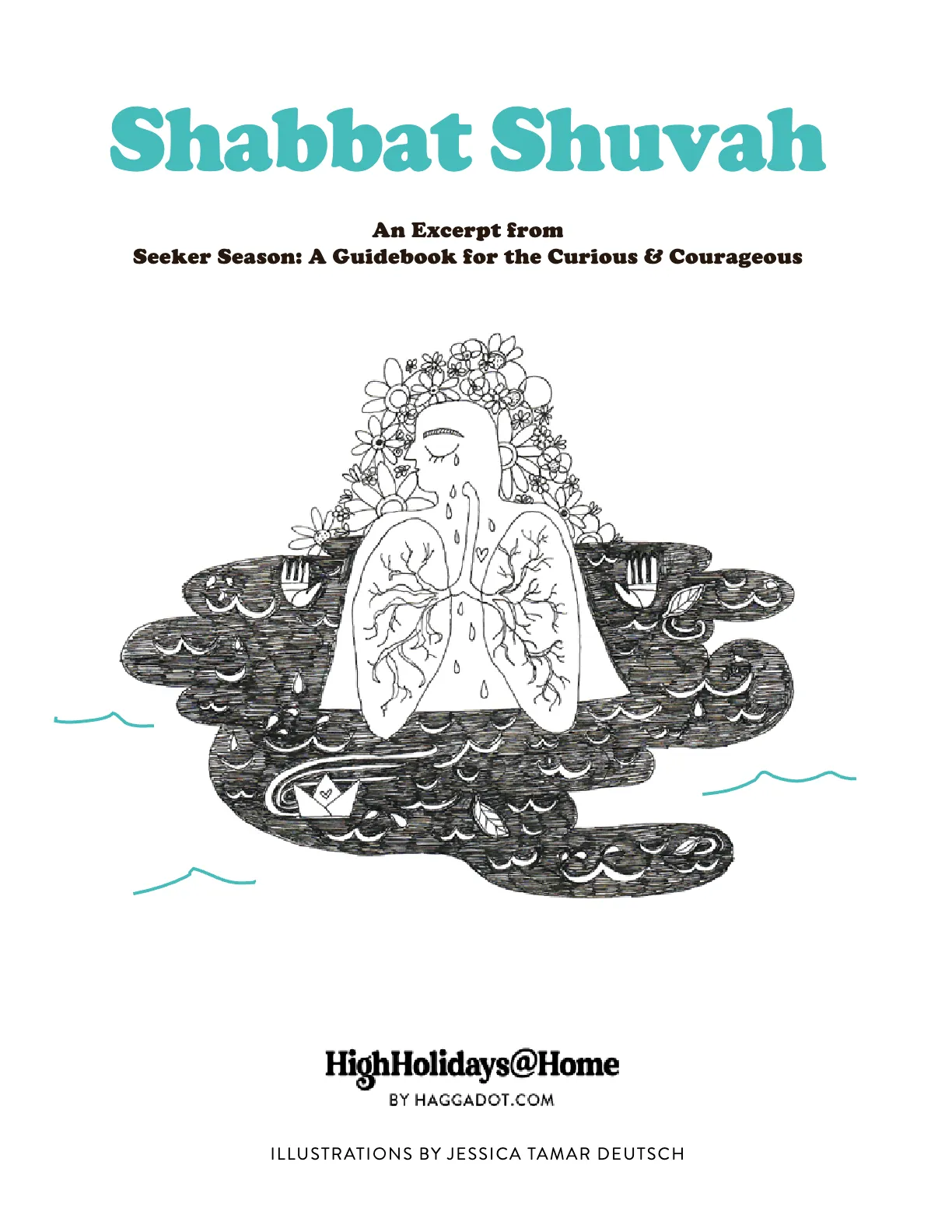
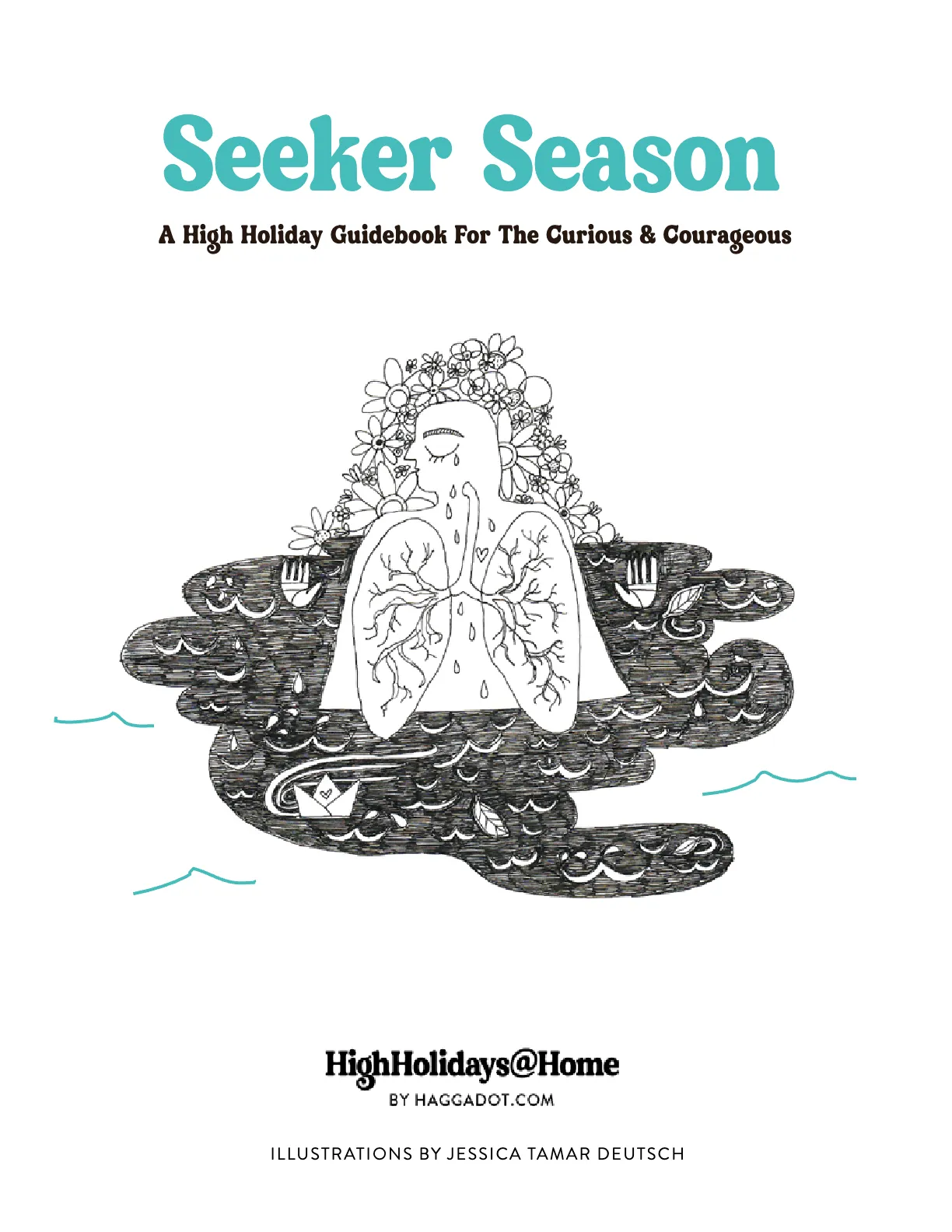
This ritual reimagines the traditional practice of tashlich, a ritual that symbolizes casting away the ways we have “missed the mark” in the past year. Using the language of “missing the mark” is a way of acknowledging past mistakes without the punitive connotation conjured by words like “sinning.” The idea of missing the mark also suggests opportunity for improvement and progress, a chance to get closer to our ideal selves. The following ritual plays on this concept with the practice of drawing a target as a metaphor of “making the mark.” It is meant to be practiced at the beach on the first day of Rosh Hashanah, but some find it meaningful to do it during the ten Days of Awe between Rosh Hashanah and Yom Kippur, the Yamim Nora’im, or even until the last day of Sukkot, expect on Shabbat.
Beginning:
Arrive at the beach and find a moment to ground yourself. This can be by taking a dip in the water, sitting in the sand and taking a few deep breaths, or any other way you like to be present in body and mind. Find a stick or other tool for drawing in the sand and draw three large concentric circles. Find three small objects. Think rocks, seashells, or pebbles. You may also choose to use a small token or object that represents your cultural background.
The three circles represent community/the world, the middle represents people who are close to you, the smallest one represents yourself.
Stand or sit in the outer circle and take a minute to think about how you “missed the mark” with each of the groups and how you can improve/contribute more in the coming year. Place a stone or object of choice in each circle as you move through the activity. You can think about specific actions you are not proud of, or take a more general approach guided by the following questions:
As you move from outer to inner circle and contemplate the answers, ground your feet or legs in the sand. Feel the ground and the warmth of the sun supporting you.
Middle:
Next, take a small bag of bread crumbs, representing things you have done in the past year that you have not been proud of. Here is another opportunity to use something that represents your unique background. For example, instead of bread crumbs, you can use salt or another spice– anything that can be easily dispersed in water. Thank G-d or a higher power for giving you another chance to improve in the coming year.
If you want, you can use the traditional tashlich prayer, or any alternative that resonates with you.
Here is one option:
Holy One of Blessing
Here I am again
ready to let go of my mistakes.
Help me to release myself
from all the ways I've missed the mark.
Help me to stop carrying
the baggage of my poor choices.
As I cast this bread upon the waters
lift my troubles off my shoulders.
Help me to know that last year is over,
washed away like crumbs in the current.
Open my heart to blessing and gratitude.
Renew my soul as the dew renews the grasses.
Amen.
-Rabbi Judith Beiner
End:
Return to your circle. Collect the three objects and return to the outer, largest circle. You will repeat the opening exercise, but instead of asking yourself how you can do better, ask:
The goal is to bring the energy of all the good you have done into the new year. You can end the practice by placing your hand on your heart, closing your eyes, and visualizing yourself starting the new year in joy and peace, committed to spreading this very joy and peace to others.
Alternative practices: If you don’t have access to a beach, you can do this ritual at home with a sand tray and a bath tub, or at a park! Sand art kits work great too!
Note: To make this practice extra special, you can wear something new for the ritual, such as a new bathing suit/sun hat. This can also be done as a shared experience with a friend or family member. Make the ritual your own by adding or modifying to meet your unique needs!
Feliz Año Nuevo and Shanah Tovah!
Ritual by Elianna Bernstein
Making the Mark by Elliana Bernstein
Preview
More
In This New Year By Lee Hendler
In this new year:
I promise to work harder at being the best me I know I can be.
I pray for the strength to be reliable and fair,
A good listener and kind friend,
A person who thinks before she speaks,
Helps before he is asked.
I promise to work harder at holding back my anger
And unleashing my joy.
In this new year:
I pray for the strength to turn away from old habits
That fit me like my favorite old gym sneakers.
My mother doesn’t like the way they look but they feel so good to me.
My sister can’t stand the way they smell—she says they make her gag.
And my dog likes to chew on the laces even though that’s not good for him.
It’s hard to give up things I’ve lived with for such a long time.
In this new year:
I pray for the courage to act
When I know an injustice has taken place,
And all around me others are choosing not to act.
I pray for the wisdom to choose action
That will make a good difference
And may persuade others to act too.
In this new year:
I pray that I can remember to remember what I promised.
I promise a lot because it is easier to say yes than no.
Then I end up saying no to my yeses.
I hope this will be the year I learn to say no and make my yeses
The promises that I can remember.
In this new year:
I pray for patience with myself and all my loved ones.
The long span of history suggests that in difficult times
Hope does more for us than despair.
I choose to be hopeful about our future
And to act based on that choice.
I will be more than content with what I have.
I will rejoice in my fullness and work to assure that others have that same privilege.
I will watch less news and see more life, listen to fewer podcasts and talk to more family members.
I will make a new friend.
I will renew an old friendship.
I will get involved in a new cause.
I will learn one new thing every day.
I will tell someone who has never heard it from me that I love them.
Tashlich, which literally means “casting off,” is a beautifully simple and accessible practice, grounded in the purifying nature of water.
The core of the ritual is the casting of bread, pebbles, or some other natural material such as leaves, into a natural body of water. This action symbolizes the casting off of one’s sins; the places in our lives over the past year in which we’ve missed the mark. While the Rabbis were at first suspicious of this practice due to its framing of casting off sins as a symbolic gesture rather than something accomplished through a lengthy process of teshuvah, tashlich can serve as a way to embody teshuvah and put it into practice.
Begin by bringing a bag of breadcrumbs or other decomposable or natural material to a nearby body of water and taking in the beauty of your surroundings. Think about what had to come into existence for you to be here today—the water, yes, but perhaps any nearby trees, maybe a bridge, the path you took or the car you drove. Place one hand on your heart, and give thanks for everything coming together to make up your ritual experience today.
Once you’ve attuned more fully to the space around you, take out your breadcrumbs or other materials. Hold the bag to your chest and close your eyes, taking in a deep breath. Think over the last year of your life. What have you wrestled with? What has kept you going? Is there anything that came up during the past year which you would like to let go of, perhaps a way of being, such as perfectionism? Is there maybe something that you’ve depended upon that no longer serves your highest intentions?
When you have something in mind, you can open your eyes and take a breadcrumb (or pebble, or leaf) out of the bag. As you cast it into the water, follow its trajectory with your gaze. If it’s a breadcrumb or leaf, it may bob and float. If it’s a pebble, it will probably sink with a satisfying plop. That which you would like to release is now being carried away by the water.
Repeat until you feel that the practice is complete.
showing
1-6
of
318
Page
1
of
53
Featured ritual books
Seven Weekly Rituals for a Changing Climate
Preview

showing
1-6
of
44
Page
1
of
8