“FEELING GOOD” BY NINA SIMONE
Birds flying high
You know how I feel
Sun in the sky
You know how I feel
Reeds driftin' on by
You know how I feel
It's a new dawn
It's a new day
It's a new life
For me
And I'm feeling good
____________________
Fish in the sea
You know how I feel
River running free
You know how I feel
Blossom on the tree
You know how I feel
It's a new dawn
It's a new day
It's a new life
For me
And I'm feeling good
____________________
Dragonfly out in the sun, you know what I mean, don't you know
Butterflies all havin' fun, you know what I mean
Sleep in peace when the day is done, that's what I mean
And this old world is a new world
And a bold world
For me
And I’m feeling good
____________________
Stars when you shine
You know how I feel
Scent of the pine
You know how I feel
Oh freedom is mine
And I know how I feel
It's a new dawn
It's a new day
It's a new life
For me
And I'm feeling good
____________________
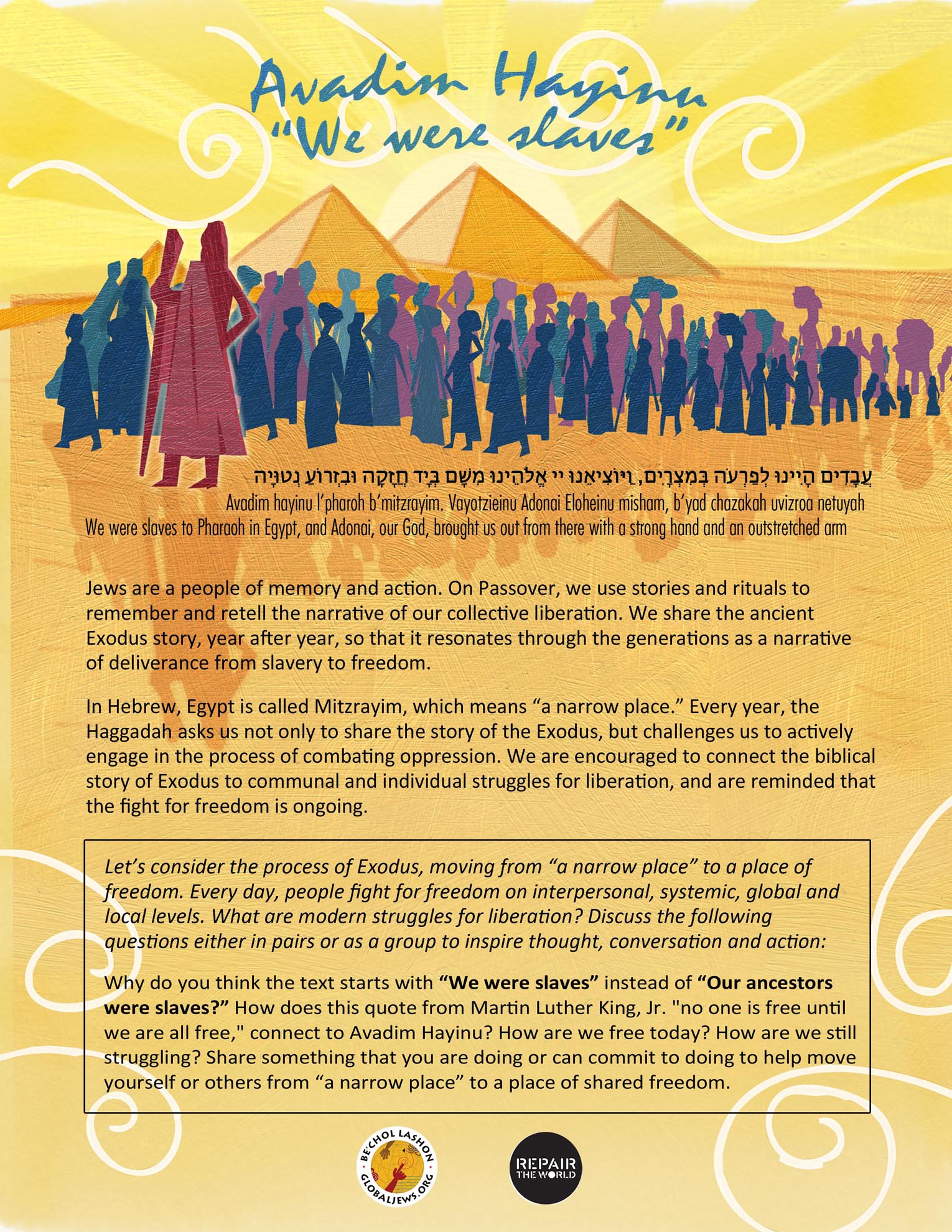
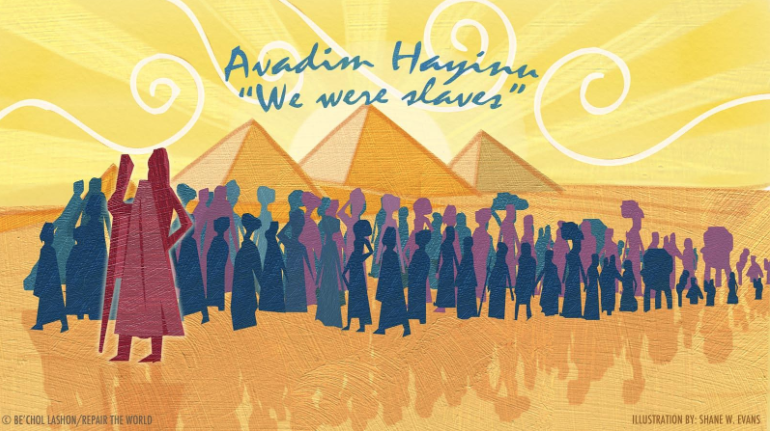
The Racial Justice & Inclusivity Haggadah
Download here: https://globaljews.org/resources/holidays/passover/racial-justice-and-inclusivity-haggadah/
By Sarah Spencer
Passover is a time for people to gather around tables, share stories food and rituals. It can be joyous and exciting. But like with any communal setting, is can also be complicated to navigate the different needs and agendas people bring to the table. Still, if we follow Jewish tradition, we will find Passover can be a model for how to create positive diverse communal connections. Its rituals and structures teach us to talk across differences and celebrate commonalities.
Passover is about story telling. And good communication is based on the ability to tell our own stories. Before we gather to celebrate our common identity, we must each own our personal story. Judaism has an oral history, and we have survived by telling those stories and passing them down through the generations. Passover brings us together to celebrate a universal experience of slavery to freedom, a concept everyone can relate to in some way or another. This is the theme around which the story telling takes place on this particular evening. Having a common theme around which to tell stories, a theme with which people from different places or times can identify which, is one of the ways in which people can connect across differences.
Passover encourages us to invite strangers into our home so that we remember that we too were once strangers in own land. We are supposed to open the door and include the strange, the unfamiliar into our familiar Passover ceremony. We can only build strong community when we view the prospect of engaging others as a positive opportunity. Recognize that perhaps some of the people at our table may feel like strangers or that people already sitting at your table may be a stranger to your personal Passover story. We welcome others into our experience and learn about ourselves when we share our stories and hear other people’s experiences and perspectives.
Passover is all about asking questions; so is bridging differences. Ask questions of the people whom share Seder. Diversity is not about trying to understand somebody else’s experience as your own or listening politely while they speak. It is about engaging and learning so that you both might learn from your curiosity about their life. Sometimes it is difficult to ask questions about that which makes us different. Asking questions in a well structured and thought out way can help us navigate what can feel like difficult and unfamiliar territory.
There are many ways to ask questions: like the four children, we can be intentional about how we engage with one another, and need to recognize and celebrate that we all have different levels of skill and capacity when it comes to asking— some are wise, some wicked, some ignorant, and some don’t even know how to ask. Regardless of how we may ask or be asked, it is our engagement with one another that will ensure we continue to grow as individuals and as a people.
The traditional Seder is supposed to be a raucous affair, with food, song, ritual and debate. This historic framework provides a wonderful space for all of us to engage across differences.
CUP OF REDEMPTION
At a traditional seder we fill a cup of wine for the prophet Elijah who is a symbol of redemption.
At this seder we are raising a cup of water as a symbol of the redemption that women have brought through the generations.
All: Water is the symbol of life.
Reader: The biblical prophet Miriam saved her brother from the waters of the Nile, she led the song of victory aber the waters of the red sea parted and God gave abundant water to the people.
Reader: We remember Miriam the prophet, who danced at the Sea of Reeds to celebrate the Exodus, a well of fresh water was said to follow her in the desert so that the Israelites always had water to drink. We remember Prophet Miriam
Reader: Instead of being enslaved, Harriet Tubman, known as a conductor of the Underground Railroad, set out with her two brothers, and followed the North Star in the sky to guide her north to freedom always walking near the water’s edge.
Reader: We remember, Harriet Tubman, conductor on the Underground Railroad, who led 300 captured Africans from slavery to freedom, as she sang Wade in the Water, a warning to those who followed that the water would protect them from trouble and offer redemption.
All: We acknowledge that water itself is necessary to sustain life. Water is the symbol of redemption.
The Racial Justice & Inclusivity Haggadah
Download here: https://globaljews.org/resources/holidays/passover/racial-justice-and-inclusivity-haggadah/
“FEELING GOOD” BY NINA SIMONE
Birds flying high
You know how I feel
Sun in the sky
You know how I feel
Reeds driftin' on by
You know how I feel
It's a new dawn
It's a new day
It's a new life
For me
And I'm feeling good
____________________
Fish in the sea
You know how I feel
River running free
You know how I feel
Blossom on the tree
You know how I feel
It's a new dawn
It's a new day
It's a new life
For me
And I'm feeling good
____________________
Dragonfly out in the sun, you know what I mean, don't you know
Butterflies all havin' fun, you know what I mean
Sleep in peace when the day is done, that's what I mean
And this old world is a new world
And a bold world
For me
And I’m feeling good
____________________
Stars when you shine
You know how I feel
Scent of the pine
You know how I feel
Oh freedom is mine
And I know how I feel
It's a new dawn
It's a new day
It's a new life
For me
And I'm feeling good
____________________
The Racial Justice & Inclusivity Haggadah
Download here: https://globaljews.org/resources/holidays/passover/racial-justice-and-inclusivity-haggadah/
By Sarah Spencer
Passover is a time for people to gather around tables, share stories food and rituals. It can be joyous and exciting. But like with any communal setting, is can also be complicated to navigate the different needs and agendas people bring to the table. Still, if we follow Jewish tradition, we will find Passover can be a model for how to create positive diverse communal connections. Its rituals and structures teach us to talk across differences and celebrate commonalities.
Passover is about story telling. And good communication is based on the ability to tell our own stories. Before we gather to celebrate our common identity, we must each own our personal story. Judaism has an oral history, and we have survived by telling those stories and passing them down through the generations. Passover brings us together to celebrate a universal experience of slavery to freedom, a concept everyone can relate to in some way or another. This is the theme around which the story telling takes place on this particular evening. Having a common theme around which to tell stories, a theme with which people from different places or times can identify which, is one of the ways in which people can connect across differences.
Passover encourages us to invite strangers into our home so that we remember that we too were once strangers in own land. We are supposed to open the door and include the strange, the unfamiliar into our familiar Passover ceremony. We can only build strong community when we view the prospect of engaging others as a positive opportunity. Recognize that perhaps some of the people at our table may feel like strangers or that people already sitting at your table may be a stranger to your personal Passover story. We welcome others into our experience and learn about ourselves when we share our stories and hear other people’s experiences and perspectives.
Passover is all about asking questions; so is bridging differences. Ask questions of the people whom share Seder. Diversity is not about trying to understand somebody else’s experience as your own or listening politely while they speak. It is about engaging and learning so that you both might learn from your curiosity about their life. Sometimes it is difficult to ask questions about that which makes us different. Asking questions in a well structured and thought out way can help us navigate what can feel like difficult and unfamiliar territory.
There are many ways to ask questions: like the four children, we can be intentional about how we engage with one another, and need to recognize and celebrate that we all have different levels of skill and capacity when it comes to asking— some are wise, some wicked, some ignorant, and some don’t even know how to ask. Regardless of how we may ask or be asked, it is our engagement with one another that will ensure we continue to grow as individuals and as a people.
The traditional Seder is supposed to be a raucous affair, with food, song, ritual and debate. This historic framework provides a wonderful space for all of us to engage across differences.
CUP OF REDEMPTION
At a traditional seder we fill a cup of wine for the prophet Elijah who is a symbol of redemption.
At this seder we are raising a cup of water as a symbol of the redemption that women have brought through the generations.
All: Water is the symbol of life.
Reader: The biblical prophet Miriam saved her brother from the waters of the Nile, she led the song of victory aber the waters of the red sea parted and God gave abundant water to the people.
Reader: We remember Miriam the prophet, who danced at the Sea of Reeds to celebrate the Exodus, a well of fresh water was said to follow her in the desert so that the Israelites always had water to drink. We remember Prophet Miriam
Reader: Instead of being enslaved, Harriet Tubman, known as a conductor of the Underground Railroad, set out with her two brothers, and followed the North Star in the sky to guide her north to freedom always walking near the water’s edge.
Reader: We remember, Harriet Tubman, conductor on the Underground Railroad, who led 300 captured Africans from slavery to freedom, as she sang Wade in the Water, a warning to those who followed that the water would protect them from trouble and offer redemption.
All: We acknowledge that water itself is necessary to sustain life. Water is the symbol of redemption.
The Racial Justice & Inclusivity Haggadah
Download here: https://globaljews.org/resources/holidays/passover/racial-justice-and-inclusivity-haggadah/
showing
1-6
of
27
Page
1
of
5