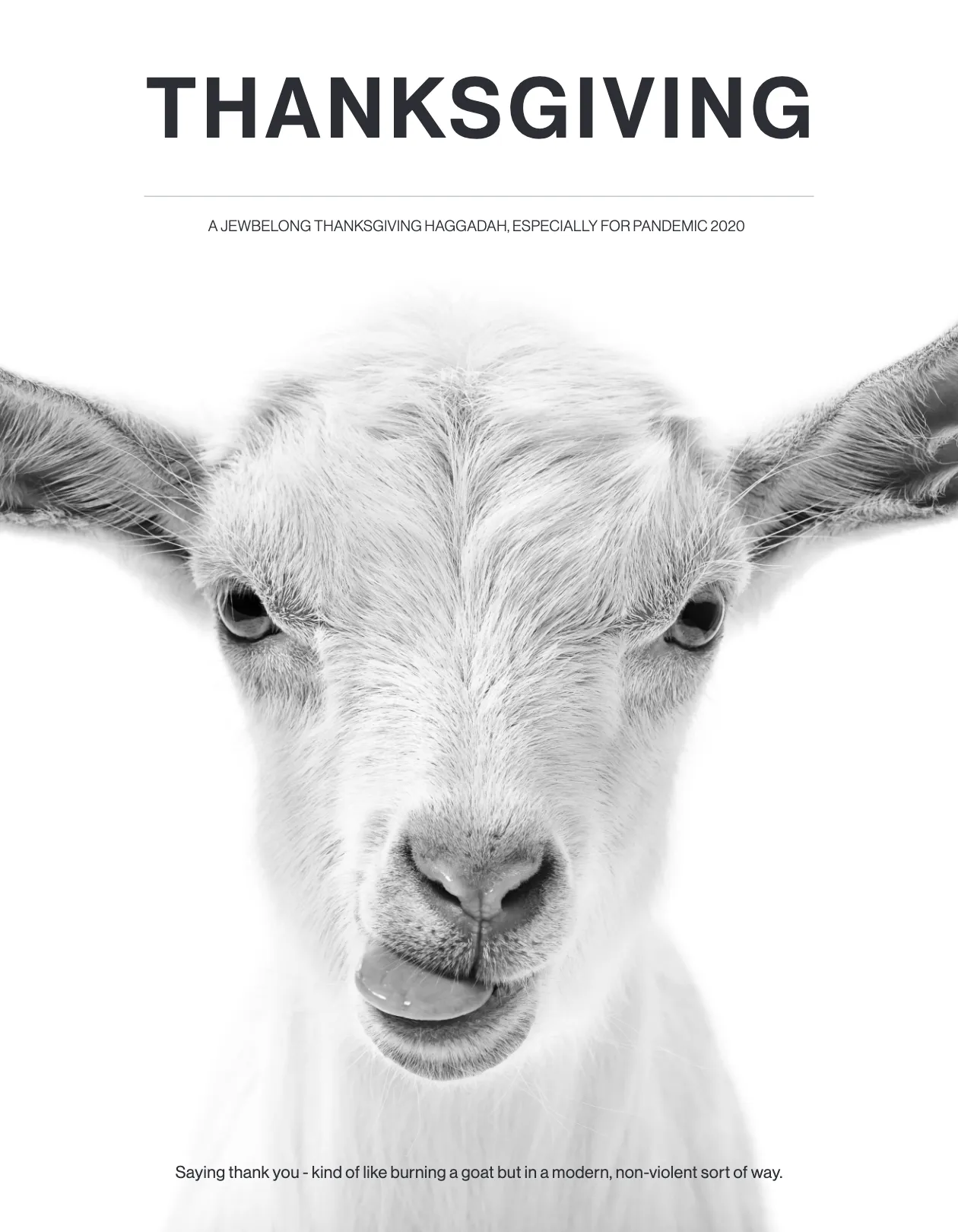
JewBelong's Thanksgiving Haggadah
Preview
CHAD GADYA, CHAD GADYA
dizabin aba bitrei zuzei,
chad gadya, chad gadya.
Va'ata shunra,
ve'achla legadya
dizabin aba bitrei zuzei,
chad gadya, chad gadya.
An only kid! An only kid
My father bought for two zuzim
Chad gadya, Chad gadya
Then came the cat and ate the kid
My father bought For two zuzim
Chad gadya, Chad gadya
Then came the dog And bit the cat
That ate the kid
My father bought For two zuzim
Chad gadya, Chad gadya
Then came the stick and beat the dog
That bit the cat that ate the kid
My father bought for two zuzim
Chad gadya, Chad gadya
Then came the fire and burned the stick
That beat the dog That bit the cat
That ate the kid
My father bought for two zuzim
Chad gadya, Chad gadya
Then came the water and quenched the fire
That burned the stick That beat the dog
That bit the cat that ate the kid
My father bought for two zuzim
Chad gadya, Chad gadya
Then came the ox and drank the water
That quenched the fire that burned the stick
That beat the dog that bit the cat
That ate the kid
My father bought for two zuzim
Chad gadya, Chad gadya
Then came the butcher and killed the ox
Then came the ox and drank the water
That quenched the fire that burned the stick
That beat the dog that bit the cat
That ate the kid
My father bought for two zuzim
Chad gadya, Chad gadya
Then came the angel of death and slew the butcher
Then came the butcher and killed the ox
Then came the ox and drank the water
That quenched the fire that burned the stick
That beat the dog that bit the cat
That ate the kid
My father bought for two zuzim
Chad gadya, Chad gadya
Then came the Holy One, blest be He!
And destroyed the angel of death
Then came the angel of death and slew the butcher
Then came the butcher and killed the ox
Then came the ox and drank the water
That quenched the fire that burned the stick
That beat the dog that bit the cat
That ate the kid
My father bought for two zuzim
Chad gadya, Chad gadya
May you grant my family and all Israel a good and long life. Remember us with blessings and kindness. Give me the opportunity to raise my children and grandchildren to be truly wise and people of truth. Please hear my prayer at this time. Regard me as a worthy descendant of Sarah, Rebecca, Rachel and Leah, and let my candles never be extinguished. Let the light of Your face shine upon us. Amen.
The day ends. The earth turns from sunshine to dusk and then to darkness. We assume for ourselves the task of kindling candles in the night, to enlighten the dark corners of our world. We still live in perilous times. Behind us, though receding into the memories of even the oldest among us, we can still sense the fires of Auschwitz and Hiroshima. Before us, the threat of acts of terrorism and gun violence. We gather tonight to create from fire, not the heat of destruction, but the light of instruction; indeed to see more clearly the wisdom, strength and caring that glows from within each of us.
TOGETHER: May these candles, lit on the Festival of Freedom, bring light into our hearts and minds. May they renew our courage to act for justice and freedom here and now. May they illumine the path to truth, justice and peace. And so we repeat the ancient blessing:
בָּרוּךְ אַתָּה יְיָ אֱלֹהֵֽינוּ מֶֽלֶךְ הָעוֹלָם
אֲשֶׁר קִדְּשָֽׁנוּ בְּמִצְוֹתָיו
וְצִוָּֽנוּ לְהַדְלִיק נֵר שֶׁלְ (שַבָת וְשֶל) יֹום טֹוב
Baruch atah Adonai, Eloheinu Melech ha-olam,
asher kiddishanu b’mitzvotav,
v’tzivanu lehadlik neir shel [Shabbat v'shel] Yom Tov.
We praise God, spirit of everything,
who has made us distinct through Your directives
and has directed us to kindle [the Shabbat] and holiday lights.
THESE WORDS ARE DEDICATED TO THOSE WHO DIED
Because they had no love and felt alone in the world
Because they were afraid to be alone and tried to stick it out
Because they could not ask
Because they were shunned
Because they were sick and their bodies could not resist the disease
Because they played it safe
Because they had no connection
Because they had no faith
Because they felt they did not belong and wanted to die
THESE WORDS ARE DEDICATED TO THOSE WHO DIED
Because they were loners and liked it
Because they acquired friends and drew others to them
Because they drew attention to themselves and always got picked
Because they took risks
Because they were too stubborn and refused to give up
Because they asked for too much
THESE WORDS ARE DEDICATED TO THOSE WHO DIED
Because a card was lost and a number was skipped
Because a bed was denied
Because a place was filled and no other was left
THESE WORDS ARE DEDICATED TO THOSE WHO DIED
Because someone did not follow through
Because someone was overworked and forgot
Because someone left everything to God
Because someone was late
Because someone did not arrive at all
Because someone told them to wait and they just couldn’t any longer
THESE WORDS ARE DEDICATED TO THOSE WHO DIED
Because death is a punishment
Because death is a reward
Because death is the final rest
Because death is eternal rage
THESE WORDS ARE DEDICATED TO THOSE WHO DIED
THESE WORDS ARE DEDICATED TO THOSE WHO SURVIVED
Because their second grade teacher gave them books
Because they did not draw attention to themselves and got lost in the shuffle
Because they knew someone who knew someone else who could help them
and bumped into them on a corner on a Thursday afternoon
Because they played it safe
Because they took risks
Because they were lucky
THESE WORDS ARE DEDICATED TO THOSE WHO SURVIVED
Because they knew how to cut corners
Because they drew attention to themselves and always got picked
Because they had no principles and were hard
THESE WORDS ARE DEDICATED TO THOSE WHO SURVIVED
Because they refused to give up and defied statistics
Because they had faith and trusted in God
Because they expected the worst and were always prepared
Because they were angry
Because they could ask
Because they mooched off others and saved their strength
Because they endured humiliation
Because they turned the other cheek
Because they looked the other way
THESE WORDS ARE DEDICATED TO THOSE WHO SURVIVED
Because life is a wilderness and they were savage
Because life is an awakening and they were alert
Because life is a flowering and they blossomed
Because life is a struggle and they struggled
Because life is a gift and they were free to accept it.
THESE WORDS ARE DEDICATED TO THOSE WHO SURVIVED. BASHERT.
- IRENA KLEPSISZ
Adapted from Rabbi Ayelet Cohen
Our God and God of our ancestors, bless this country and all who dwell within it. Help us to experience the blessings of our lives and circumstances, to be vigilant, compassionate, and brave. Strengthen us when we are afraid, help us to channel our anger, so that it motivates us to action. Help us to be humble in our fear, knowing that as vulnerable as we feel, there are those at greater risk, and that it is our holy work to stand with them.
Help us to taste the sweetness of liberty, to not take for granted the freedoms won in generations past. Source of all life, guide our leaders with righteousness, that they may use their influence and authority to speak truth and act for justice. May all who dwell in this country enjoy its freedoms, and be protected by its laws. May this nation use its power and wealth to be a voice for justice, peace, and equality for all who dwell on earth.
May we be strong and have courage to be bold in our action and deep in our compassion, to uproot bigotry, intolerance, and violence in all its forms, to celebrate the many faces of God reflected in the wondrous diversity of humanity, to welcome the stranger and the immigrant and to honor the gift of those who seek refuge and possibility here, as they have since before this nation was born. Let justice well up like waters, and righteousness like a mighty stream. Amen.
ROCK OF AGES
MA'OZ TZUR
Rock of Ages let our song
Praise thy saving power
Thou amidst the raging foes
Was our sheltering tower. Furious, they assailed us,
But thine armour veiled us.
And thy word broke their sword When our own strength failed us. And thy word broke their sword When our own strength failed us.
Hebrew: Maoz tzur y’shuati l’cha naeh l’shabeach Tikon beit t’filati
v’sham todah n’zabeach. L’eit tachin matbeach mitzar hamnabeach
Az egmor b’shir mizmor chanukat hamizbeach Az egmor b’shir mizmor chanukat hamizbeach.
Source: JewBelong
CHAD GADYA, CHAD GADYA
dizabin aba bitrei zuzei,
chad gadya, chad gadya.
Va'ata shunra,
ve'achla legadya
dizabin aba bitrei zuzei,
chad gadya, chad gadya.
An only kid! An only kid
My father bought for two zuzim
Chad gadya, Chad gadya
Then came the cat and ate the kid
My father bought For two zuzim
Chad gadya, Chad gadya
Then came the dog And bit the cat
That ate the kid
My father bought For two zuzim
Chad gadya, Chad gadya
Then came the stick and beat the dog
That bit the cat that ate the kid
My father bought for two zuzim
Chad gadya, Chad gadya
Then came the fire and burned the stick
That beat the dog That bit the cat
That ate the kid
My father bought for two zuzim
Chad gadya, Chad gadya
Then came the water and quenched the fire
That burned the stick That beat the dog
That bit the cat that ate the kid
My father bought for two zuzim
Chad gadya, Chad gadya
Then came the ox and drank the water
That quenched the fire that burned the stick
That beat the dog that bit the cat
That ate the kid
My father bought for two zuzim
Chad gadya, Chad gadya
Then came the butcher and killed the ox
Then came the ox and drank the water
That quenched the fire that burned the stick
That beat the dog that bit the cat
That ate the kid
My father bought for two zuzim
Chad gadya, Chad gadya
Then came the angel of death and slew the butcher
Then came the butcher and killed the ox
Then came the ox and drank the water
That quenched the fire that burned the stick
That beat the dog that bit the cat
That ate the kid
My father bought for two zuzim
Chad gadya, Chad gadya
Then came the Holy One, blest be He!
And destroyed the angel of death
Then came the angel of death and slew the butcher
Then came the butcher and killed the ox
Then came the ox and drank the water
That quenched the fire that burned the stick
That beat the dog that bit the cat
That ate the kid
My father bought for two zuzim
Chad gadya, Chad gadya
May you grant my family and all Israel a good and long life. Remember us with blessings and kindness. Give me the opportunity to raise my children and grandchildren to be truly wise and people of truth. Please hear my prayer at this time. Regard me as a worthy descendant of Sarah, Rebecca, Rachel and Leah, and let my candles never be extinguished. Let the light of Your face shine upon us. Amen.
The day ends. The earth turns from sunshine to dusk and then to darkness. We assume for ourselves the task of kindling candles in the night, to enlighten the dark corners of our world. We still live in perilous times. Behind us, though receding into the memories of even the oldest among us, we can still sense the fires of Auschwitz and Hiroshima. Before us, the threat of acts of terrorism and gun violence. We gather tonight to create from fire, not the heat of destruction, but the light of instruction; indeed to see more clearly the wisdom, strength and caring that glows from within each of us.
TOGETHER: May these candles, lit on the Festival of Freedom, bring light into our hearts and minds. May they renew our courage to act for justice and freedom here and now. May they illumine the path to truth, justice and peace. And so we repeat the ancient blessing:
בָּרוּךְ אַתָּה יְיָ אֱלֹהֵֽינוּ מֶֽלֶךְ הָעוֹלָם
אֲשֶׁר קִדְּשָֽׁנוּ בְּמִצְוֹתָיו
וְצִוָּֽנוּ לְהַדְלִיק נֵר שֶׁלְ (שַבָת וְשֶל) יֹום טֹוב
Baruch atah Adonai, Eloheinu Melech ha-olam,
asher kiddishanu b’mitzvotav,
v’tzivanu lehadlik neir shel [Shabbat v'shel] Yom Tov.
We praise God, spirit of everything,
who has made us distinct through Your directives
and has directed us to kindle [the Shabbat] and holiday lights.
THESE WORDS ARE DEDICATED TO THOSE WHO DIED
Because they had no love and felt alone in the world
Because they were afraid to be alone and tried to stick it out
Because they could not ask
Because they were shunned
Because they were sick and their bodies could not resist the disease
Because they played it safe
Because they had no connection
Because they had no faith
Because they felt they did not belong and wanted to die
THESE WORDS ARE DEDICATED TO THOSE WHO DIED
Because they were loners and liked it
Because they acquired friends and drew others to them
Because they drew attention to themselves and always got picked
Because they took risks
Because they were too stubborn and refused to give up
Because they asked for too much
THESE WORDS ARE DEDICATED TO THOSE WHO DIED
Because a card was lost and a number was skipped
Because a bed was denied
Because a place was filled and no other was left
THESE WORDS ARE DEDICATED TO THOSE WHO DIED
Because someone did not follow through
Because someone was overworked and forgot
Because someone left everything to God
Because someone was late
Because someone did not arrive at all
Because someone told them to wait and they just couldn’t any longer
THESE WORDS ARE DEDICATED TO THOSE WHO DIED
Because death is a punishment
Because death is a reward
Because death is the final rest
Because death is eternal rage
THESE WORDS ARE DEDICATED TO THOSE WHO DIED
THESE WORDS ARE DEDICATED TO THOSE WHO SURVIVED
Because their second grade teacher gave them books
Because they did not draw attention to themselves and got lost in the shuffle
Because they knew someone who knew someone else who could help them
and bumped into them on a corner on a Thursday afternoon
Because they played it safe
Because they took risks
Because they were lucky
THESE WORDS ARE DEDICATED TO THOSE WHO SURVIVED
Because they knew how to cut corners
Because they drew attention to themselves and always got picked
Because they had no principles and were hard
THESE WORDS ARE DEDICATED TO THOSE WHO SURVIVED
Because they refused to give up and defied statistics
Because they had faith and trusted in God
Because they expected the worst and were always prepared
Because they were angry
Because they could ask
Because they mooched off others and saved their strength
Because they endured humiliation
Because they turned the other cheek
Because they looked the other way
THESE WORDS ARE DEDICATED TO THOSE WHO SURVIVED
Because life is a wilderness and they were savage
Because life is an awakening and they were alert
Because life is a flowering and they blossomed
Because life is a struggle and they struggled
Because life is a gift and they were free to accept it.
THESE WORDS ARE DEDICATED TO THOSE WHO SURVIVED. BASHERT.
- IRENA KLEPSISZ
Adapted from Rabbi Ayelet Cohen
Our God and God of our ancestors, bless this country and all who dwell within it. Help us to experience the blessings of our lives and circumstances, to be vigilant, compassionate, and brave. Strengthen us when we are afraid, help us to channel our anger, so that it motivates us to action. Help us to be humble in our fear, knowing that as vulnerable as we feel, there are those at greater risk, and that it is our holy work to stand with them.
Help us to taste the sweetness of liberty, to not take for granted the freedoms won in generations past. Source of all life, guide our leaders with righteousness, that they may use their influence and authority to speak truth and act for justice. May all who dwell in this country enjoy its freedoms, and be protected by its laws. May this nation use its power and wealth to be a voice for justice, peace, and equality for all who dwell on earth.
May we be strong and have courage to be bold in our action and deep in our compassion, to uproot bigotry, intolerance, and violence in all its forms, to celebrate the many faces of God reflected in the wondrous diversity of humanity, to welcome the stranger and the immigrant and to honor the gift of those who seek refuge and possibility here, as they have since before this nation was born. Let justice well up like waters, and righteousness like a mighty stream. Amen.
ROCK OF AGES
MA'OZ TZUR
Rock of Ages let our song
Praise thy saving power
Thou amidst the raging foes
Was our sheltering tower. Furious, they assailed us,
But thine armour veiled us.
And thy word broke their sword When our own strength failed us. And thy word broke their sword When our own strength failed us.
Hebrew: Maoz tzur y’shuati l’cha naeh l’shabeach Tikon beit t’filati
v’sham todah n’zabeach. L’eit tachin matbeach mitzar hamnabeach
Az egmor b’shir mizmor chanukat hamizbeach Az egmor b’shir mizmor chanukat hamizbeach.
Source: JewBelong
showing
1-6
of
78
Page
1
of
13