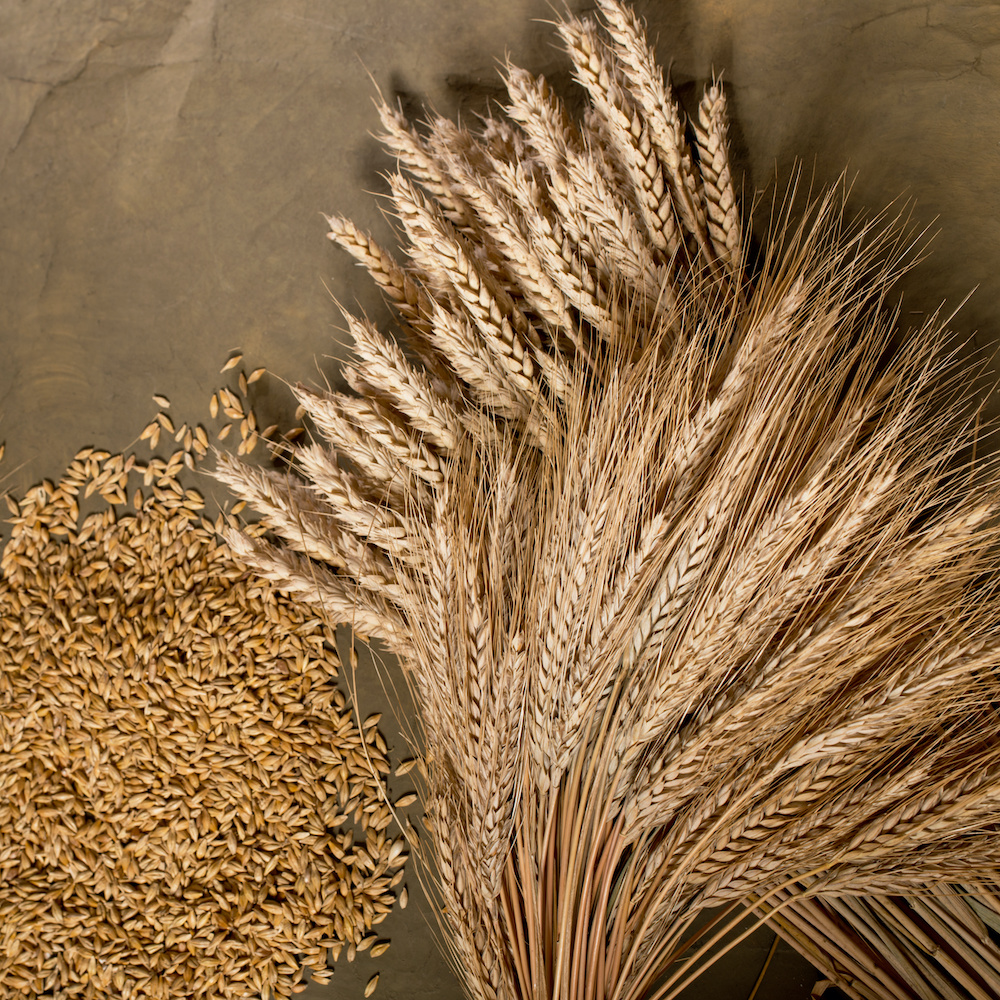
Did you know that the seven weeks between Passover and Shavuot have their own special significance in Jewish tradition? These 49 days are known as the Omer period, representing the sacrificial grain offerings that were once brought to the Temple during this time.
Traditionally, Jews track each of these days as part of a practice called Counting the Omer. Public celebrations and festivals were once put on pause in order for people to more fully engage with the reflective nature of the Omer count.
Each week of the Omer is associated with a particular aspect of Divinity. The count begins this year at the close of the second Passover Seder and Shabbat on Saturday, April 16th, with the sephira, or Divine aspect, of Chesed (Lovingkindness).
The sephirot (plural of sephira) in the weeks following Chesed are, in order, Gevurah (Boundaries), Tiferet (Balance), Netzach (Endurance), Hod (Surrender), Yesod (Foundation), and Malchut/Shekhinah (Sovereignty).
Counting the Omer is an ancient ritual, but it’s also one that can still be relevant to us today when we reframe it as a mindfulness practice.
Here are some simple ritual ideas to calm your mind and soothe your soul!
Our last sephirot is Malchut/Shekhinah, or sovereignty. What is sovereignty? Associated with kingship, dominion, and divinity, sovereignty is the call to become more fully yourself as a being rooted in the dignity and love that is the birthright of all people.
Write a letter to your higher self, that is, to the wise and compassionate part of you connected to something beyond. What do you wish to learn from this aspect of yourself? In the following days, keep an eye out for any answers that may be wanting to come through. You never know through what ways your higher self might want to communicate.
When the week is over, place a hand on your heart and thank yourself for this Omer practice.
Netzach, the fourth Divine aspect, represents endurance. How has your drive or resilience enabled you to accomplish things in your life?
Call to mind something that you’ve been putting off. How might you approach that task with an eye to endurance and sustainability? Take a deep breath and imagine yourself successfully completing that task. What mental shift will it take in order for this to happen in reality?
The sixth sephirot on our journey is yesod, or foundation, a fundamental aspect of our existence on this earth. What is a tree without its roots?
Close your eyes and visualize yourself as connected to the earth, whether you are sitting directly on the ground outside or many stories up in a high-rise. Picture roots moving down from your legs and into the earth, anchoring you gently to the soil. Remember that you are whole.
Tiferet is the result of mixing the energies of the two sephirot that have come before, chesed and gevurah, leading to a kind of balance between the two. What situations, in your experience, have been made easier through the application of balance?
Take out a notebook or piece of paper and journal on the following prompt, or on anything else that comes to mind: how can you approach what emerges for you this week with both compassionate openness and the courage to say no when necessary?
Hod, or surrender, functions as the opposite of Netzach. Just as endurance can be essential, sometimes it is time to let go. How do you know when it’s time to push forward, and when you would be better served to surrender?
This week, call to mind something that you’d like to let go of—it could be something hurtful that someone’s said to you, or a belief that you’ve outgrown and are feeling the need to compost. Whatever it is, write it down on a piece of paper and place it in a fire-safe bowl or container. Light the piece of paper on fire and watch what you’d like to let go of burn away.
Did you know that the seven weeks between Passover and Shavuot have their own special significance in Jewish tradition? These 49 days are known as the Omer period, representing the sacrificial grain offerings that were once brought to the Temple during this time.
Traditionally, Jews track each of these days as part of a practice called Counting the Omer. Public celebrations and festivals were once put on pause in order for people to more fully engage with the reflective nature of the Omer count.
Each week of the Omer is associated with a particular aspect of Divinity. The count begins this year at the close of the second Passover Seder and Shabbat on Saturday, April 16th, with the sephira, or Divine aspect, of Chesed (Lovingkindness).
The sephirot (plural of sephira) in the weeks following Chesed are, in order, Gevurah (Boundaries), Tiferet (Balance), Netzach (Endurance), Hod (Surrender), Yesod (Foundation), and Malchut/Shekhinah (Sovereignty).
Counting the Omer is an ancient ritual, but it’s also one that can still be relevant to us today when we reframe it as a mindfulness practice.
Here are some simple ritual ideas to calm your mind and soothe your soul!
Our last sephirot is Malchut/Shekhinah, or sovereignty. What is sovereignty? Associated with kingship, dominion, and divinity, sovereignty is the call to become more fully yourself as a being rooted in the dignity and love that is the birthright of all people.
Write a letter to your higher self, that is, to the wise and compassionate part of you connected to something beyond. What do you wish to learn from this aspect of yourself? In the following days, keep an eye out for any answers that may be wanting to come through. You never know through what ways your higher self might want to communicate.
When the week is over, place a hand on your heart and thank yourself for this Omer practice.
Netzach, the fourth Divine aspect, represents endurance. How has your drive or resilience enabled you to accomplish things in your life?
Call to mind something that you’ve been putting off. How might you approach that task with an eye to endurance and sustainability? Take a deep breath and imagine yourself successfully completing that task. What mental shift will it take in order for this to happen in reality?
The sixth sephirot on our journey is yesod, or foundation, a fundamental aspect of our existence on this earth. What is a tree without its roots?
Close your eyes and visualize yourself as connected to the earth, whether you are sitting directly on the ground outside or many stories up in a high-rise. Picture roots moving down from your legs and into the earth, anchoring you gently to the soil. Remember that you are whole.
Tiferet is the result of mixing the energies of the two sephirot that have come before, chesed and gevurah, leading to a kind of balance between the two. What situations, in your experience, have been made easier through the application of balance?
Take out a notebook or piece of paper and journal on the following prompt, or on anything else that comes to mind: how can you approach what emerges for you this week with both compassionate openness and the courage to say no when necessary?
Hod, or surrender, functions as the opposite of Netzach. Just as endurance can be essential, sometimes it is time to let go. How do you know when it’s time to push forward, and when you would be better served to surrender?
This week, call to mind something that you’d like to let go of—it could be something hurtful that someone’s said to you, or a belief that you’ve outgrown and are feeling the need to compost. Whatever it is, write it down on a piece of paper and place it in a fire-safe bowl or container. Light the piece of paper on fire and watch what you’d like to let go of burn away.
showing
1-6
of
8
Page
1
of
2