And G!d says: "You cannot do the work every single second of every single day, which is why we've set aside this night-and-day in the middle of the Big Week just for you. To sleep unhurried, to eat well and bask in familiarity, because this is where the community happens. This is where we are born, each and every week, where we hold each other. There is no work without holding each other."
And G!d says: "That in the days between Rosh Hashanah and Yom Kippur, everything will seem a little sweeter, and a little crisper, and even the weather might cooperate, and the world will brush herself up and show you just how wondrous she can be, so you'd better rise to her level and do the work"
And G!d says: "And for those of you who are scrambling because the work is not finished enough, for those with lingering, unsaid apologies on their lips, for those who could not bring themselves from Mitzrayim's pain through the wilderness to forgiveness: you don't get to give up now. I stopped making perfect things after I made water and light. There was never hope for you. There is only what you do together. You don't get to stop."
From Dane Kuttler's The G!d Wrestlers, The Social Justice Warrior's Guide to the High Holy Days, Sept. 2015
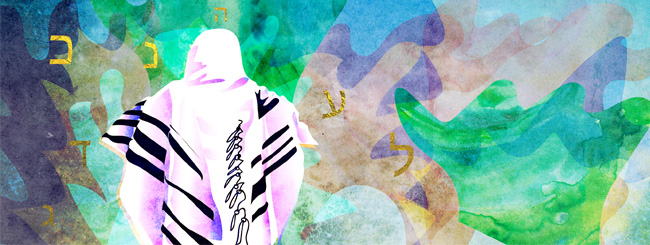
On Solo Prayer
By Kohenet Shamirah aka Sarah Chandler
The following essay was written in summer 2020 as an introduction to the Azazel Chapbook. It is meant to help the reader reflect on and be inspired to spend some or all of Yom Kippur in solo prayer.
Concentric circles, familiar tunes, simple liturgy, candles, sitting on the floor. This is a snapshot of havdallah, the brief Saturday night ceremony to mark the end of shabbat. In my teens, it was always my favorite ritual. I felt close to those around me, knew what to expect, and could count on a feeling of closeness and connection.
Raised in an active Reform congregation with a large youth group, all of my entryways to prayer were in groups. I thrived at Eisner, my Jewish overnight camp where we had daily prayers each night ‘by unit.’ I remember getting to college directly after camp and counting the days until shabbat, because then I could finally pray again. And yet, there were dozens of classmates in my dorm who prayed on weekdays. Sometimes they joined a minyan, sometimes they prayed on their own. Once one of them brought me along to the Orthodox minyan on campus - even though the words were familiar, the aesthetic of gender-segregated seating and rushed Hebrew turned me off.
It wasn’t until after college that I tried out the practice of solo prayer. Active in my Reform Havurah in college and various independent minyanim in my 20s, we spent most of the week planning and organizing to produce a particular style and flavor of shabbat gatherings. It didn’t really occur to me that I would engage with prayer outside of a minyan - a quorum of 10 “adults” over the age of 13.
My grandma once asked me if I wanted anything from a stack of books with Hebrew titles she had on her shelf. Most of them I already owned, except for one - it was titled “ tekhines ” and had “Mrs. Averbuch” in penciled script on the inside cover. Mrs. Averbuch was my namesake - my great grandmother after whom I was named; she passed away ten years before I was born. I knew her as “Bubbe Sarah.” I knew this book was special, not just because it was a women’s prayerbook in Yiddish, but because Bubbe Sarah had actually used it for her prayers. See this page for more about Yiddish tekhines & a series of sample prompts.
Praying solo at home was the norm for women like Bubbe Sarah, because for centuries, public prayer has prioritized those who “count” in the minyan. Women were not encouraged to participate in communal life, as the rabbis of the Talmud say, to exempt them from the obligation. In other words, to enable them to focus on the obligations of the home and the family. I used to feel sorry for those women stuck at home and alienated from communal life. More recently, especially during quarantine times, I have been yearning to learn from them.
My first deep encounter with solo prayer came on a night hike in the woods of Isabella Freedman, while teaching as an outdoor educator with Teva Learning Center. Our leader Nili Simhai wove together chant, midrash (storytelling of sacred text), and meditation instructions. I felt energized in my body and was able to relax in a way that enabled me to connect with spirit - with an ‘inner’ world.
Since those Teva days, I have experimented with solo prayer in the basement of Yeshivat Hadar, my living room couch, a hotel room in the Irish countryside, the balcony of my Jerusalem apartment, and even a narrow alley behind a falafel restaurant in Ramallah. And yet, the settings that best enabled me to really connect with the divine, as opposed to just get through a certain number of pages or prayers, were almost always in nature.
These past six months, March - August 2020, living alone in a one-bedroom apartment in Brooklyn during a pandemic, I have spent a great deal of time in solo prayer. It has not been easy. Even when leading or following along with a group on zoom, there are often extra layers that make it challenging to fully drop into the experience. The semblance of community, sometimes called “communality,” is simultaneously comforting and alienating.
I think of my Bubble Sarah talking to her idea of G!d from her kitchen table. What was she grateful for? What did she request in her prayers? Who was on her list of people in need of healing? Were there kids trying to interrupt and distract her, or did she save her conversations with G!d for when they were asleep? Yes, she was alone, but she was praying on behalf of her family, her community, the whole world.
When I go to the roof, to the park, to the river, to the woods, to the ocean - while I don’t have that same connected feeling of concentric circles of my youth - I feel whole. The air is coming through me and we are one. My skin absorbs the sun rays. My being is grounded with these rocks. Dew glistens around me as sweat beads appear and evaporate. The trees and the wind are my prayer partners. Even as I am yearning to sing with other humans, I am so grateful to sing surrounded by creation. The words and feelings and sounds - everything I put into the prayers, emanate out through these beings. The prayers go farther and I go deeper.
Launching in September 2020, the Azazel Chapbook is a new resource for Yom Kippur Musaf (midday prayers). It will include adaptations of the mahzor for individual prayer in nature, as well as how to gather a small “not-a-minyan” group for safe outdoor Yom Kippur rituals. Visit this page for a free download.
And G!d says: "You cannot do the work every single second of every single day, which is why we've set aside this night-and-day in the middle of the Big Week just for you. To sleep unhurried, to eat well and bask in familiarity, because this is where the community happens. This is where we are born, each and every week, where we hold each other. There is no work without holding each other."
And G!d says: "That in the days between Rosh Hashanah and Yom Kippur, everything will seem a little sweeter, and a little crisper, and even the weather might cooperate, and the world will brush herself up and show you just how wondrous she can be, so you'd better rise to her level and do the work"
And G!d says: "And for those of you who are scrambling because the work is not finished enough, for those with lingering, unsaid apologies on their lips, for those who could not bring themselves from Mitzrayim's pain through the wilderness to forgiveness: you don't get to give up now. I stopped making perfect things after I made water and light. There was never hope for you. There is only what you do together. You don't get to stop."
From Dane Kuttler's The G!d Wrestlers, The Social Justice Warrior's Guide to the High Holy Days, Sept. 2015
And G!d says: "You cannot do the work every single second of every single day, which is why we've set aside this night-and-day in the middle of the Big Week just for you. To sleep unhurried, to eat well and bask in familiarity, because this is where the community happens. This is where we are born, each and every week, where we hold each other. There is no work without holding each other."
And G!d says: "That in the days between Rosh Hashanah and Yom Kippur, everything will seem a little sweeter, and a little crisper, and even the weather might cooperate, and the world will brush herself up and show you just how wondrous she can be, so you'd better rise to her level and do the work"
And G!d says: "And for those of you who are scrambling because the work is not finished enough, for those with lingering, unsaid apologies on their lips, for those who could not bring themselves from Mitzrayim's pain through the wilderness to forgiveness: you don't get to give up now. I stopped making perfect things after I made water and light. There was never hope for you. There is only what you do together. You don't get to stop."
From Dane Kuttler's The G!d Wrestlers, The Social Justice Warrior's Guide to the High Holy Days, Sept. 2015
On Solo Prayer
By Kohenet Shamirah aka Sarah Chandler
The following essay was written in summer 2020 as an introduction to the Azazel Chapbook. It is meant to help the reader reflect on and be inspired to spend some or all of Yom Kippur in solo prayer.
Concentric circles, familiar tunes, simple liturgy, candles, sitting on the floor. This is a snapshot of havdallah, the brief Saturday night ceremony to mark the end of shabbat. In my teens, it was always my favorite ritual. I felt close to those around me, knew what to expect, and could count on a feeling of closeness and connection.
Raised in an active Reform congregation with a large youth group, all of my entryways to prayer were in groups. I thrived at Eisner, my Jewish overnight camp where we had daily prayers each night ‘by unit.’ I remember getting to college directly after camp and counting the days until shabbat, because then I could finally pray again. And yet, there were dozens of classmates in my dorm who prayed on weekdays. Sometimes they joined a minyan, sometimes they prayed on their own. Once one of them brought me along to the Orthodox minyan on campus - even though the words were familiar, the aesthetic of gender-segregated seating and rushed Hebrew turned me off.
It wasn’t until after college that I tried out the practice of solo prayer. Active in my Reform Havurah in college and various independent minyanim in my 20s, we spent most of the week planning and organizing to produce a particular style and flavor of shabbat gatherings. It didn’t really occur to me that I would engage with prayer outside of a minyan - a quorum of 10 “adults” over the age of 13.
My grandma once asked me if I wanted anything from a stack of books with Hebrew titles she had on her shelf. Most of them I already owned, except for one - it was titled “ tekhines ” and had “Mrs. Averbuch” in penciled script on the inside cover. Mrs. Averbuch was my namesake - my great grandmother after whom I was named; she passed away ten years before I was born. I knew her as “Bubbe Sarah.” I knew this book was special, not just because it was a women’s prayerbook in Yiddish, but because Bubbe Sarah had actually used it for her prayers. See this page for more about Yiddish tekhines & a series of sample prompts.
Praying solo at home was the norm for women like Bubbe Sarah, because for centuries, public prayer has prioritized those who “count” in the minyan. Women were not encouraged to participate in communal life, as the rabbis of the Talmud say, to exempt them from the obligation. In other words, to enable them to focus on the obligations of the home and the family. I used to feel sorry for those women stuck at home and alienated from communal life. More recently, especially during quarantine times, I have been yearning to learn from them.
My first deep encounter with solo prayer came on a night hike in the woods of Isabella Freedman, while teaching as an outdoor educator with Teva Learning Center. Our leader Nili Simhai wove together chant, midrash (storytelling of sacred text), and meditation instructions. I felt energized in my body and was able to relax in a way that enabled me to connect with spirit - with an ‘inner’ world.
Since those Teva days, I have experimented with solo prayer in the basement of Yeshivat Hadar, my living room couch, a hotel room in the Irish countryside, the balcony of my Jerusalem apartment, and even a narrow alley behind a falafel restaurant in Ramallah. And yet, the settings that best enabled me to really connect with the divine, as opposed to just get through a certain number of pages or prayers, were almost always in nature.
These past six months, March - August 2020, living alone in a one-bedroom apartment in Brooklyn during a pandemic, I have spent a great deal of time in solo prayer. It has not been easy. Even when leading or following along with a group on zoom, there are often extra layers that make it challenging to fully drop into the experience. The semblance of community, sometimes called “communality,” is simultaneously comforting and alienating.
I think of my Bubble Sarah talking to her idea of G!d from her kitchen table. What was she grateful for? What did she request in her prayers? Who was on her list of people in need of healing? Were there kids trying to interrupt and distract her, or did she save her conversations with G!d for when they were asleep? Yes, she was alone, but she was praying on behalf of her family, her community, the whole world.
When I go to the roof, to the park, to the river, to the woods, to the ocean - while I don’t have that same connected feeling of concentric circles of my youth - I feel whole. The air is coming through me and we are one. My skin absorbs the sun rays. My being is grounded with these rocks. Dew glistens around me as sweat beads appear and evaporate. The trees and the wind are my prayer partners. Even as I am yearning to sing with other humans, I am so grateful to sing surrounded by creation. The words and feelings and sounds - everything I put into the prayers, emanate out through these beings. The prayers go farther and I go deeper.
Launching in September 2020, the Azazel Chapbook is a new resource for Yom Kippur Musaf (midday prayers). It will include adaptations of the mahzor for individual prayer in nature, as well as how to gather a small “not-a-minyan” group for safe outdoor Yom Kippur rituals. Visit this page for a free download.
And G!d says: "You cannot do the work every single second of every single day, which is why we've set aside this night-and-day in the middle of the Big Week just for you. To sleep unhurried, to eat well and bask in familiarity, because this is where the community happens. This is where we are born, each and every week, where we hold each other. There is no work without holding each other."
And G!d says: "That in the days between Rosh Hashanah and Yom Kippur, everything will seem a little sweeter, and a little crisper, and even the weather might cooperate, and the world will brush herself up and show you just how wondrous she can be, so you'd better rise to her level and do the work"
And G!d says: "And for those of you who are scrambling because the work is not finished enough, for those with lingering, unsaid apologies on their lips, for those who could not bring themselves from Mitzrayim's pain through the wilderness to forgiveness: you don't get to give up now. I stopped making perfect things after I made water and light. There was never hope for you. There is only what you do together. You don't get to stop."
From Dane Kuttler's The G!d Wrestlers, The Social Justice Warrior's Guide to the High Holy Days, Sept. 2015
showing
1-6
of
340
Page
1
of
57