High Holiday Discussion Guide
Preview
More
LEADER After we’ve eaten, we share our gratitude for the nutritious food we found on our plates and the bountiful land from which it came. We bless You, Adonai, for the land and for the food it yields. It is our responsibility to make sure that every person gets the nutrition they need to thrive.
Baruch ata Adonai hazan et hakol.
Blessed are You Adonai, who provides food for all.
MAZON Sermon Seeds
Yamim Noraim
Rabbi Michael Rothbaum, JCJM '19 + '20
Rosh HaShanah, Day One — Gen. 21: the expulsion of Hagar and Ishmael
Rosh HaShanah, Day Two — Gen. 22: the binding of Isaac
Kol Nidre
Yom Kippur Morning — Leviticus 16: the two goats
Once again we wash our hands, this time in anticipation of the festive meal. May this ritual act of hand washing, followed by a blessing, lead to other sacred acts of preparation and protest, advocacy and activism, so that all may find they have the nutritious food they need.
(Either have volunteers walk around to each table with a pitcher of water and a basin or invite seder guests to wash their hands in some other way.)
LEADER: We join together in the blessing:
Baruch ata Adonai Elohenu Melech ha’olam asher kideshanu be’mitzvotav ve’tzivanu al n’tilat yadayim.
Blessed are You, Adonai our God, Ruler of the universe, who has made us holy with God’s commandments and commanded us to wash our hands.
KOS R'VI-I – THE FOURTH CUP
LEADER: We drink the Fourth Cup to remember our promise
ALL: We will create a world where all Americans, and all people, are free from hunger.
We pray that, at this time next year, each of us will be free from the yoke of hunger and poverty, and further blessed with abundance.
LEADER: We lift our glasses and read the blessing together (drink wine after the blessing):
Baruch ata Adonai Elohenu Melech ha’olam borei p’ri hagafen.
Blessed are You, Adonai our God, Ruler of the universe, who creates the fruit of the vine.
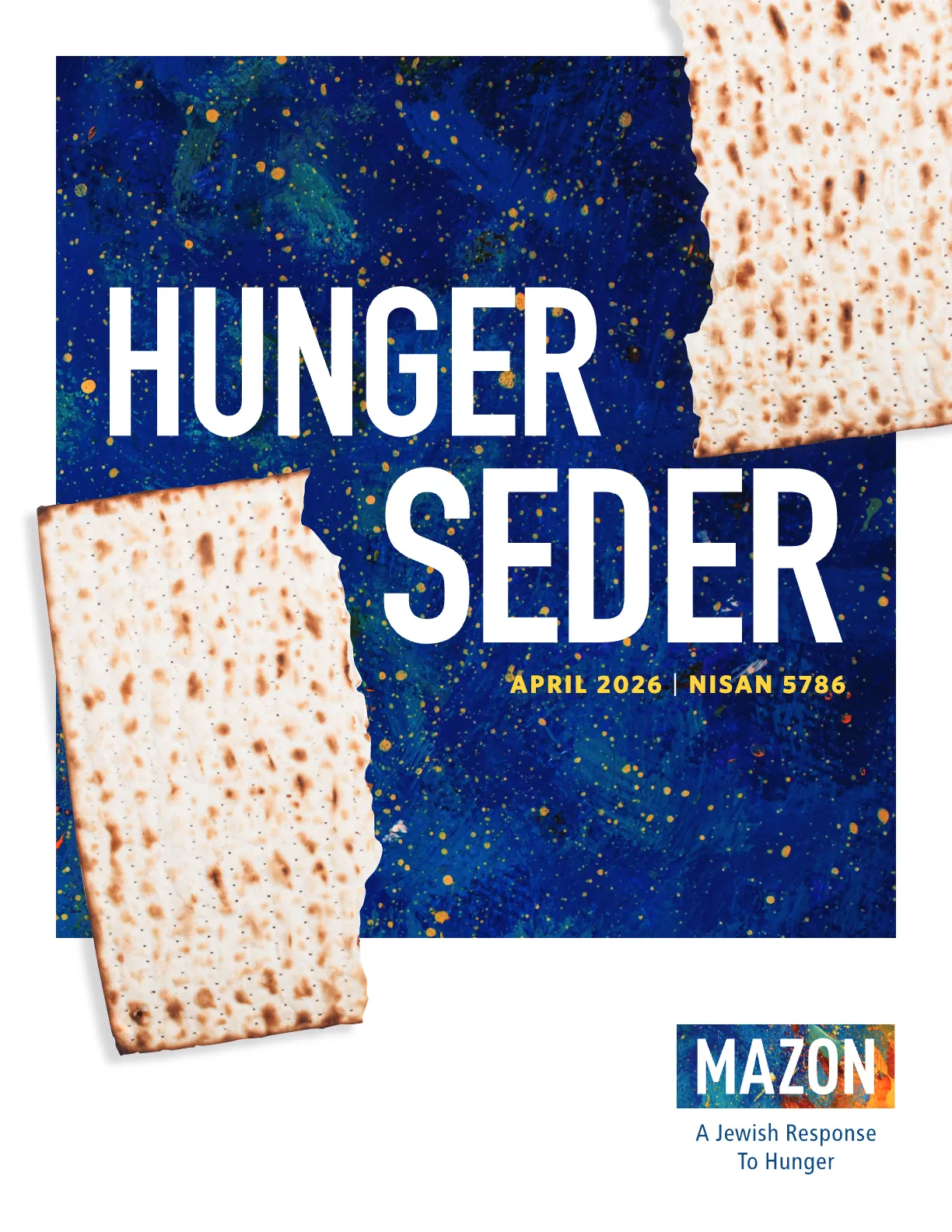
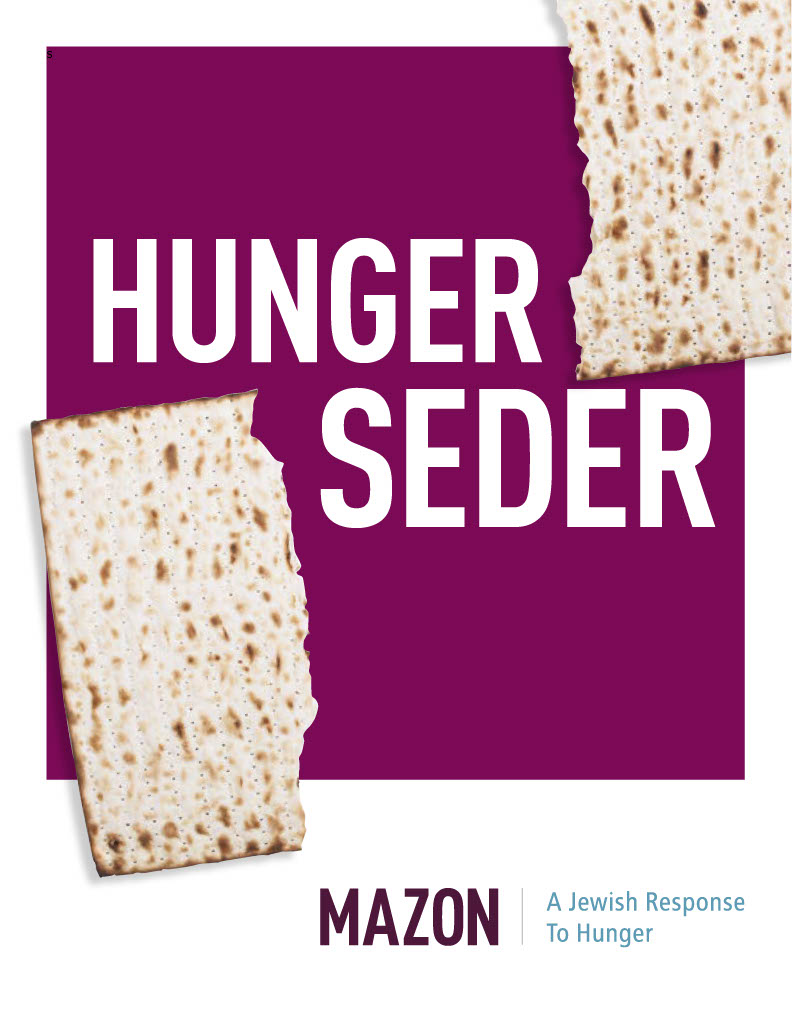
MAZON’s Fifth Question: Why on this night are millions of people going hungry? The answer is a stark and upsetting truth: Because on this night, like every other night, millions of people living in poverty have no other choice.
Passover is a magical time when we gather with family and friends to retell the story of our people’s freedom from bondage. We read from a prayer book, perform rituals that are thousands of years old, and eat. We eat A LOT. Many of us eat far more than we should, but the food is so delicious, it’s nearly impossible to resist. Unfortunately, not everyone is lucky enough to have that luxury.
Hunger in America is at an epidemic level, despite how it might seem at first glance. 50 million Americans – including 17 million children – struggle with hunger every day. One out of every six people in this country can’t be sure when or if they’ll have their next meal. Hungry people live in every community in the country and come in all colors, shapes and sizes. They wrestle with impossible choices no one should have to make: buy my daughter’s asthma medication or feed my family? Whose turn is it to eat: the children or the adults? It breaks our hearts – it should break yours.
America is a nation of abundance and wealth, and Jews are a people dedicated to fighting on behalf of the vulnerable. How could this injustice possibly happen here?
There is another way – an end to hunger is within our reach. Early in the seder we say, “All who are hungry, let them enter and eat.” More than an invitation to join us at the dinner table, we at MAZON see these words as a rallying cry – a call to do more to help those who so desperately need it; to fight for responsible government policies that promote the health and security of everyone in our nation; to provide access to resources that allow people to pick themselves up and build (or rebuild) their lives; to give every man, woman and child a chance not only to live their lives, but to thrive.
High Holiday Discussion Guide
Preview
More
LEADER After we’ve eaten, we share our gratitude for the nutritious food we found on our plates and the bountiful land from which it came. We bless You, Adonai, for the land and for the food it yields. It is our responsibility to make sure that every person gets the nutrition they need to thrive.
Baruch ata Adonai hazan et hakol.
Blessed are You Adonai, who provides food for all.
MAZON Sermon Seeds
Yamim Noraim
Rabbi Michael Rothbaum, JCJM '19 + '20
Rosh HaShanah, Day One — Gen. 21: the expulsion of Hagar and Ishmael
Rosh HaShanah, Day Two — Gen. 22: the binding of Isaac
Kol Nidre
Yom Kippur Morning — Leviticus 16: the two goats
Once again we wash our hands, this time in anticipation of the festive meal. May this ritual act of hand washing, followed by a blessing, lead to other sacred acts of preparation and protest, advocacy and activism, so that all may find they have the nutritious food they need.
(Either have volunteers walk around to each table with a pitcher of water and a basin or invite seder guests to wash their hands in some other way.)
LEADER: We join together in the blessing:
Baruch ata Adonai Elohenu Melech ha’olam asher kideshanu be’mitzvotav ve’tzivanu al n’tilat yadayim.
Blessed are You, Adonai our God, Ruler of the universe, who has made us holy with God’s commandments and commanded us to wash our hands.
KOS R'VI-I – THE FOURTH CUP
LEADER: We drink the Fourth Cup to remember our promise
ALL: We will create a world where all Americans, and all people, are free from hunger.
We pray that, at this time next year, each of us will be free from the yoke of hunger and poverty, and further blessed with abundance.
LEADER: We lift our glasses and read the blessing together (drink wine after the blessing):
Baruch ata Adonai Elohenu Melech ha’olam borei p’ri hagafen.
Blessed are You, Adonai our God, Ruler of the universe, who creates the fruit of the vine.
MAZON’s Fifth Question: Why on this night are millions of people going hungry? The answer is a stark and upsetting truth: Because on this night, like every other night, millions of people living in poverty have no other choice.
Passover is a magical time when we gather with family and friends to retell the story of our people’s freedom from bondage. We read from a prayer book, perform rituals that are thousands of years old, and eat. We eat A LOT. Many of us eat far more than we should, but the food is so delicious, it’s nearly impossible to resist. Unfortunately, not everyone is lucky enough to have that luxury.
Hunger in America is at an epidemic level, despite how it might seem at first glance. 50 million Americans – including 17 million children – struggle with hunger every day. One out of every six people in this country can’t be sure when or if they’ll have their next meal. Hungry people live in every community in the country and come in all colors, shapes and sizes. They wrestle with impossible choices no one should have to make: buy my daughter’s asthma medication or feed my family? Whose turn is it to eat: the children or the adults? It breaks our hearts – it should break yours.
America is a nation of abundance and wealth, and Jews are a people dedicated to fighting on behalf of the vulnerable. How could this injustice possibly happen here?
There is another way – an end to hunger is within our reach. Early in the seder we say, “All who are hungry, let them enter and eat.” More than an invitation to join us at the dinner table, we at MAZON see these words as a rallying cry – a call to do more to help those who so desperately need it; to fight for responsible government policies that promote the health and security of everyone in our nation; to provide access to resources that allow people to pick themselves up and build (or rebuild) their lives; to give every man, woman and child a chance not only to live their lives, but to thrive.
showing
1-6
of
211
Page
1
of
36
Mazon Hunger Seder 2020
Preview
showing
1-6
of
9
Page
1
of
2