Eating a sandwich of matzah and bitter herb | koreich | כּוֹרֵךְ
When the Temple stood in Jerusalem, the biggest ritual of them all was eating the lamb offered as the Passover sacrifice. The great sage Hillel would put the meat in a sandwich made of matzah, along with some of the bitter herbs. While we do not make sacrifices any more, we honor this custom by eating a sandwich of matzah, charoset, and bitter herbs.
It was Rabbi Hillel who began making koreich, so as to fulfill the words of the Torah "They shall eat it (the Pesach offering) with matzot and marror" (Numbers 9:11). Rabbi Hillel is also famous for his tzedek (justice) mindset, which led him to ask "If I am not for myself who is for me? And being for my own self, what am 'I'? And if not now, when?"
We each need to find action steps, ways to better translate our commitments into effective action. What are some of the ways folks feel they can most sustainably translate our anger, confusion, and fear into effective action?
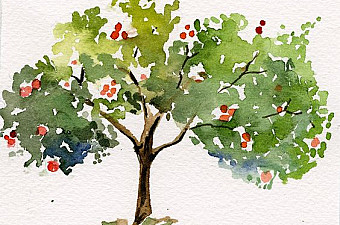
The Tu B'Shevat seder is a celebration of our relationship with nature and with fruit trees in particular, and a time for reflection. Today, as we celebrate together, let us envision ourselves as partners in shaping, cultivating, and healing the natural world. The Tu B'Shevat Seder is split into four sections, each reflecting the seasons and symbolizing different aspects of the trees and our own lives. Each section is connected to one of the four worlds of Kabbalah, Jewish mysticism, and represents the transition from the most physical to the most spiritual.
The shooting of Michael Brown, an unarmed young Black man of 18, in Ferguson, MO on August 9, 2014, by white police officer Darren Wilson, touched off a national outcry of grief and protest. The protestors in Ferguson crying out for justice and accountability were nightly met in the streets with riot police driving armored vehicles and shooting tear gas. That protest movement intensified when a grand jury declined to indict Wilson and spread with additional news of a New York grand jury that declined to indict white officers who choked Eric Garner, a 43-year-old Black man in Staten Island, to death – captured in chilling detail on video.
These events are not isolated. As more and more stories came to light, journalists and activists have realized that we do not even have a count of all the extrajudicial police killings in this country.The killings follow apattern: racist attitudes and assumptions create a perception of fear orthreat that leads to heightened tension, faster escalations, and a lack ofrestraint when it comes to pointing a gun at a person of color and pulling the trigger.Ramarley Graham. Tamir Rice. John Crawford III.Aiyana Stanley Jones. Akai Gurley. Rekia Boyd. Too many more.
Police violence targeting Black people is only possible because of the underlying history of centuries of dehumanization of Black people.
Too often, our police look like a heavily armed militia, ready to control and subdue, rather than government employees charged with protecting civilians. DC, too, uses militarized policing. Jump-out squads, long used by the Metropolitan Police Department (MPD), are groups of plainclothes police in unmarked cars who target Black people and communities, jumping out to question and detain young men with no provocation or probable cause, weapons already drawn. These are dangerous tactics that frighten young people, alienate the communities targeted, and sometimes end tragically, fatally.
In February, DC Councilmember David Grosso said, “The jump-out tactic is the antithesis to the community policing model that MPD promotes. Not only does it immediately escalate the tension between an individual and the police, but it makes our residents fearful of doing everyday things like walking down the street or sitting on the stoop to talk with friends.”
The Department of Justice report states in no uncertain terms that theFerguson Police Department’s “law enforcement practices violate the law and undermine community trust, especially among African Americans.”Yet Darren Wilson, and many other police shooters, have faced no charges. In a democratic society, the police represent us all and must protect all our communities. And they must be held accountable when they don’t.
“For Jewish support of #BlackLivesMatter to really make a difference, the discussion of racism, classism and sexism MUST come home. We need these discussions in our communities, our synagogues, our institutions, our homes as an analysis and challenge of our assumptions about our history as a people and the richness of our heritage.”– Sabrina Sojourner, #BlackLivesMatter Hanukkah Action, 2014
A traditional Passover seder is a festive, ritual-rich meal in which we remember the ancient Jewish story of liberation from slavery in Egypt. Over the centuries, thousands of different versions of the Passover haggadah, or “narrative,” have been written. Tonight, our haggadah will connect an ancient liberation story to liberation struggles that are still ongoing.
Jews have always been a multi-ethnic people, from the “mixed multitudes” who escaped Pharaoh in Egypt, to stand together at Sinai, to the incredible diversity of our many communities and traditions around the world historically and today. And whether you connect to the liberation story of the Exodus or the liberation story of Rabbi Heschel marching with Dr. King in Selma – and many, many stories in between – our people are called to work for justice everywhere.
Tonight we will lift up Black voices and Black stories both Jewish and Gentile. We will celebrate the resilience of the human spirit and take responsibility to lessen the daily demands on that spiritual strength. Tonight we will honor Black lives and Black voices by making an individual and communal commitment, as Jews, to racial justice.
Tonight we ask you to be vulnerable to each other. We ask you to wrestle with our responsibility to our sisters and brothers, because we cannot aid in the liberation of our friends from behind the walls that keep us separate.
Eating a sandwich of matzah and bitter herb | koreich | כּוֹרֵךְ
When the Temple stood in Jerusalem, the biggest ritual of them all was eating the lamb offered as the Passover sacrifice. The great sage Hillel would put the meat in a sandwich made of matzah, along with some of the bitter herbs. While we do not make sacrifices any more, we honor this custom by eating a sandwich of matzah, charoset, and bitter herbs.
It was Rabbi Hillel who began making koreich, so as to fulfill the words of the Torah "They shall eat it (the Pesach offering) with matzot and marror" (Numbers 9:11). Rabbi Hillel is also famous for his tzedek (justice) mindset, which led him to ask "If I am not for myself who is for me? And being for my own self, what am 'I'? And if not now, when?"
We each need to find action steps, ways to better translate our commitments into effective action. What are some of the ways folks feel they can most sustainably translate our anger, confusion, and fear into effective action?
The Tu B'Shevat seder is a celebration of our relationship with nature and with fruit trees in particular, and a time for reflection. Today, as we celebrate together, let us envision ourselves as partners in shaping, cultivating, and healing the natural world. The Tu B'Shevat Seder is split into four sections, each reflecting the seasons and symbolizing different aspects of the trees and our own lives. Each section is connected to one of the four worlds of Kabbalah, Jewish mysticism, and represents the transition from the most physical to the most spiritual.
The shooting of Michael Brown, an unarmed young Black man of 18, in Ferguson, MO on August 9, 2014, by white police officer Darren Wilson, touched off a national outcry of grief and protest. The protestors in Ferguson crying out for justice and accountability were nightly met in the streets with riot police driving armored vehicles and shooting tear gas. That protest movement intensified when a grand jury declined to indict Wilson and spread with additional news of a New York grand jury that declined to indict white officers who choked Eric Garner, a 43-year-old Black man in Staten Island, to death – captured in chilling detail on video.
These events are not isolated. As more and more stories came to light, journalists and activists have realized that we do not even have a count of all the extrajudicial police killings in this country.The killings follow apattern: racist attitudes and assumptions create a perception of fear orthreat that leads to heightened tension, faster escalations, and a lack ofrestraint when it comes to pointing a gun at a person of color and pulling the trigger.Ramarley Graham. Tamir Rice. John Crawford III.Aiyana Stanley Jones. Akai Gurley. Rekia Boyd. Too many more.
Police violence targeting Black people is only possible because of the underlying history of centuries of dehumanization of Black people.
Too often, our police look like a heavily armed militia, ready to control and subdue, rather than government employees charged with protecting civilians. DC, too, uses militarized policing. Jump-out squads, long used by the Metropolitan Police Department (MPD), are groups of plainclothes police in unmarked cars who target Black people and communities, jumping out to question and detain young men with no provocation or probable cause, weapons already drawn. These are dangerous tactics that frighten young people, alienate the communities targeted, and sometimes end tragically, fatally.
In February, DC Councilmember David Grosso said, “The jump-out tactic is the antithesis to the community policing model that MPD promotes. Not only does it immediately escalate the tension between an individual and the police, but it makes our residents fearful of doing everyday things like walking down the street or sitting on the stoop to talk with friends.”
The Department of Justice report states in no uncertain terms that theFerguson Police Department’s “law enforcement practices violate the law and undermine community trust, especially among African Americans.”Yet Darren Wilson, and many other police shooters, have faced no charges. In a democratic society, the police represent us all and must protect all our communities. And they must be held accountable when they don’t.
“For Jewish support of #BlackLivesMatter to really make a difference, the discussion of racism, classism and sexism MUST come home. We need these discussions in our communities, our synagogues, our institutions, our homes as an analysis and challenge of our assumptions about our history as a people and the richness of our heritage.”– Sabrina Sojourner, #BlackLivesMatter Hanukkah Action, 2014
A traditional Passover seder is a festive, ritual-rich meal in which we remember the ancient Jewish story of liberation from slavery in Egypt. Over the centuries, thousands of different versions of the Passover haggadah, or “narrative,” have been written. Tonight, our haggadah will connect an ancient liberation story to liberation struggles that are still ongoing.
Jews have always been a multi-ethnic people, from the “mixed multitudes” who escaped Pharaoh in Egypt, to stand together at Sinai, to the incredible diversity of our many communities and traditions around the world historically and today. And whether you connect to the liberation story of the Exodus or the liberation story of Rabbi Heschel marching with Dr. King in Selma – and many, many stories in between – our people are called to work for justice everywhere.
Tonight we will lift up Black voices and Black stories both Jewish and Gentile. We will celebrate the resilience of the human spirit and take responsibility to lessen the daily demands on that spiritual strength. Tonight we will honor Black lives and Black voices by making an individual and communal commitment, as Jews, to racial justice.
Tonight we ask you to be vulnerable to each other. We ask you to wrestle with our responsibility to our sisters and brothers, because we cannot aid in the liberation of our friends from behind the walls that keep us separate.
showing
1-6
of
57
Page
1
of
10