Mix-and-match
Explore content in our extensive library and pull it together into your own Jewish ritual booklet that honors and recognizes whatever life has brought your way.
Share a ritual
Add your own original content as a clip to our extensive library - a poem, blessing, or something else entirely. Someone out there is looking for exactly what only you can create.
Support us
with your donation.
Help us build moments of meaning and connection through home-based Jewish rituals.
Featured clips
Prayer for Rain in the Merit of the Matriarchs
By Rabbi Jill Hammer
Sukkot is a time of fullness and generosity, but also a time to pray for the coming season. Shemini Atzeret, the festival when we pray for rain, is an expression of our need for water, which in the Jewish tradition symbolizes life, renewal, and deliverance. The Geshem (Rain) Prayer speaks of five patriarchs. In that spirit, I have included five verses, for Sarah, Rebekah, Rachel, and Leah, and for Miriam the prophetess, paralleling verses for Abraham, Isaac, Jacob, Moses, and Aaron. This prayer uses water as a metaphor for devotion and faith, asking that God grant us life-sustaining rain.
Remember the beautiful one: her radiance pure as water!
She welcomed new souls through immersion in water.
In her old age her breasts flowed with milk like water.
Her offspring will increase like grains of sand near seas of water.
For Sarah’s sake, do not withhold water.
Remember the maiden: rising up to greet her, water!
She let down her pitcher and gave to the thirsty water.
She drew even for camels from the well of water.
Over her tent hovered a divine cloud full of water.
For the sake of Rebekah’s righteousness, grant the gift of water.
Remember the shepherdess: she brought her sheep to water!
She wrestled God-wrestlings mightier than crashing water.
For her exiled children she weeps tears of water,
and they will return to their land like returning streams of water.
For Rachel’s sake, do not withhold water.
Remember the hidden one: her veil like a fall of water!
Her womb and her deeds were more abundant than springs of water.
She praised You for Your glory as there flowed from her birth water.
King and priest suckled her as lilies suckle water.
For the sake of Leah’s righteousness, grant the gift of water.
Remember the sister: she watched at a distance from water!
She spoke softly to newborns and saved them from the river of water.
She took up her timbrel and sang at the parting of water.
For her sake, You granted the people a well of water.
For Miriam’s sake, do not withhold water.
To learn more about this prayer, visit: https://opensiddur.org/prayers/lunisolar/joyful-days/shemini-atseret/a-geshem-prayer-invoking-the-matriarchs/
Prayer for Rain by Rabbi Jill Hammer
Preview
More
People often talk about Elizabeth Kubler-Ross’s five stages of grief – denial, anger, bargaining, depression, and acceptance – as if they happen in order. They think that one must completely go through one stage before moving to the next, and when they finally get to the end, they will never grieve again. You might hear people say things like “Oh I’ve moved on from denial, and now I think I’m entering the angry stage.” But this isn’t often the case.
Emotional healing from pregnancy loss does not happen in a prescribed way. Kübler-Ross, in her writing, makes it clear that the stages are not linear – people can experience these aspects of grief at different times and they do not happen in one particular order. It’s unpredictable at best, and does not follow any specified pattern or rules.
Anger, sadness, relief, shock, guilt, numbness, frustration, yearning, desperation, loneliness….and more. They do not happen in any particular order, may happen over and over again, or may even be triggered by unexpected things. Every day, every week, every month, and even every year may come with a new (or newly revived) emotion.
These are all normal when it comes to grief.
It’s normal to…
What you are feeling….whatever you are feeling…It’s normal. Because grief doesn’t do as you say. And trying to control it can be anywhere from difficult to impossible.
It isn’t surprising that people struggle so much after infertility and/or loss. So many of us have been there too, and calling it ‘hard’ would be an understatement. But we do have the ability to learn to live with our grief. We are born with that gift.
Remind yourself that you can do this. You are not broken. You are changed. You can grow with this change and learn to live with it. It’s not about getting through it - it’s about learning to live with it. Give yourself love as you try to wade through all the waves of emotion.
Reflection Prompts
Source: I was Supposed to Have a Baby
Recognizing the Non-Linear Nature of Healing
Preview
More
If you have a loved one who is struggling to build their family your heart may ache for them and you may wonder how you can offer them support. It is often hard to know what to say, and you may find that there are many moments when you feel powerless and unable to help them get closer to the life they dream of. This resource offers you a number of pathways through which you can offer support to your loved one. It may also help you to better distinguish between actions to avoid and actions to embrace.
This piece was authored by Stacie Baker, a social worker who has worked with Uprooted: A Jewish Response to Fertility Journeys. Uprooted has created a number of Jewish resources designed to offer emotional and spiritual support to those struggling to build their families. Uprooted also has created resources for loved ones who may also grapple with many complicated emotions as they watch their family member or friend experience a fertility journey.
Someone who is infertile already feels othered because of their need to seek medical support to have a family, something that many people can do naturally. When you combine that with the lack of affordable options, and the absence of some kind of insurance coverage or stipend from an organization, it means having a child will be out of reach for most. And that is a sobering thought.
So let’s break the costs down - Did you know that the average cost to couples undergoing in-vitro fertilization (IVF) can be as much as $25,000 in the US? Prevailing research has shown that the financial burden is one of the greatest weights on those undergoing treatment. Or how about the fact that cost is often a major deciding factor as to whether people are willing to continue treatment or not? And did you realize that if someone needs treatment, and even if they have great insurance, they might spend more than they would on their house down payment, just for the chance at a single child?
Let’s break down some costs: While some people who need intervention from a reproductive endocrinologist (aka fertility doctor) are lucky enough to conceive on their first intrauterine insemination/IUI ($1,500 - $2,000), many have to go through IVF ($15,000-$25,000). Most people also require various blood tests, procedures, and surgeries, which can be an additional $200,000.
If those options fail, or if other options are not available, they might try sperm donation ($1,000-$2,000), egg donation ($8,000-10,000), or surrogacy ($150,000 - $200,000), or a combination.... sometimes more than once. Finally, while many think adoption (ranging from $20,000 - $65,000) is an ‘easy out,’ it is often more expensive than trying multiple rounds of fertility treatments. Many in the fertility world don’t consider adoption until after unsuccessful attempts with different treatments, so adoption may be financially unfeasible.
But what about insurance?
Many insurance companies don’t cover fertility treatment at all. Some cover a small amount - maybe up to $10,000, which is not even enough for one full round of IVF. Or they place a cap on the amount they will pay per patient during their lifetime. Insurance companies may also have time-consuming and physically-invasive parameters for using their money, such as requiring 12 unsuccessful IUIs before they are willing to allocate coverage towards IVF.
This financial stress can take a toll on all relationships, including those with family, friends, and partners. This emotional strain can often cause rifts in relationships, and when you couple that with the desperation many feel when they can’t afford treatment, it can be a recipe for disaster.
However, having major financial burdens while going through infertility does not mean that your relationship will fall apart. Similar to other relationship challenges, careful communication, making space for each partner to air their concerns, listening with an empathic ear, and seeking outside support from peers, clergy, or therapists when things get overwhelming, will be the key.
Thankfully, there are also some options to help alleviate the financial burden. Organizations like Bonei Olam, Hasidah, Jewish Fertility Foundation, Priya, Stardust Jewish Fertility Foundation, A Giving Hand, etc. all exist to provide financial support for fertility treatments. Though some of these organizations have geographical as well as other prerequisites before funds can be dispersed, many people do receive financial assistance with their treatment. Some employers are known to offer excellent fertility benefits. Finally, some people choose to move to countries that have better financial opportunities for those seeking fertility treatment.
Reflection Prompts
Source: I was Supposed to Have a Baby
Financial Burden of Fertility Treatments and Experiences
Preview
More

“It is literally impossible to be a modern Jewish woman”
Preview
More
Supporting a loved one through a fertility journey can be deeply emotional and sometimes overwhelming—not just for them, but for you as well. Whether they're navigating treatments, facing uncertainty, or grieving losses, your compassion and presence can make a meaningful difference. Here’s what you can do to offer thoughtful, respectful, and truly supportive care during this sensitive time.
Listen. Are you a good listener? Do you give people the space to say everything they want to say?
Be supportive. What can you say and do to show loved ones & friends that you will support them through this challenge?
Be empathic. Are you empathic? Have you considered what it might feel like not to be able to get or stay pregnant? Have you imagined how it would feel if your own children had not been born?
Let go of judgment. How can you begin to let go of some of your firmly held beliefs?
Have compassion. What is a comforting thing that you can say to someone struggling to build or grow their family?
Be sensitive. Give consideration to how you manage your own pregnancy announcement, or other pregnancy-related news. For someone on a difficult fertility journey, hearing others’ successful pregnancy announcements can awaken feelings of sorrow and loss.
Be understanding. If your friend or family member chooses not to attend family functions, such as a birthday party with children, give them grace. Do not challenge them or take it personally.
Recognize the scope of the problem. You can acknowledge to your loved one or friend that you realize that infertility is a huge stressor, with many implications. You may want to gently ask if they have considered therapy. Professional counseling to help process and manage the many painful stressors of infertility can be very beneficial.
Educate yourself. There are many ways to build families. You may not be aware of all of them. Be a model to teach and increase tolerance.
showing
1-6
of
8
Page
1
of
2
Featured ritual books

Passover for a Fertility Journey
Preview

Blessings for IUI / IVF / Family Building
Preview
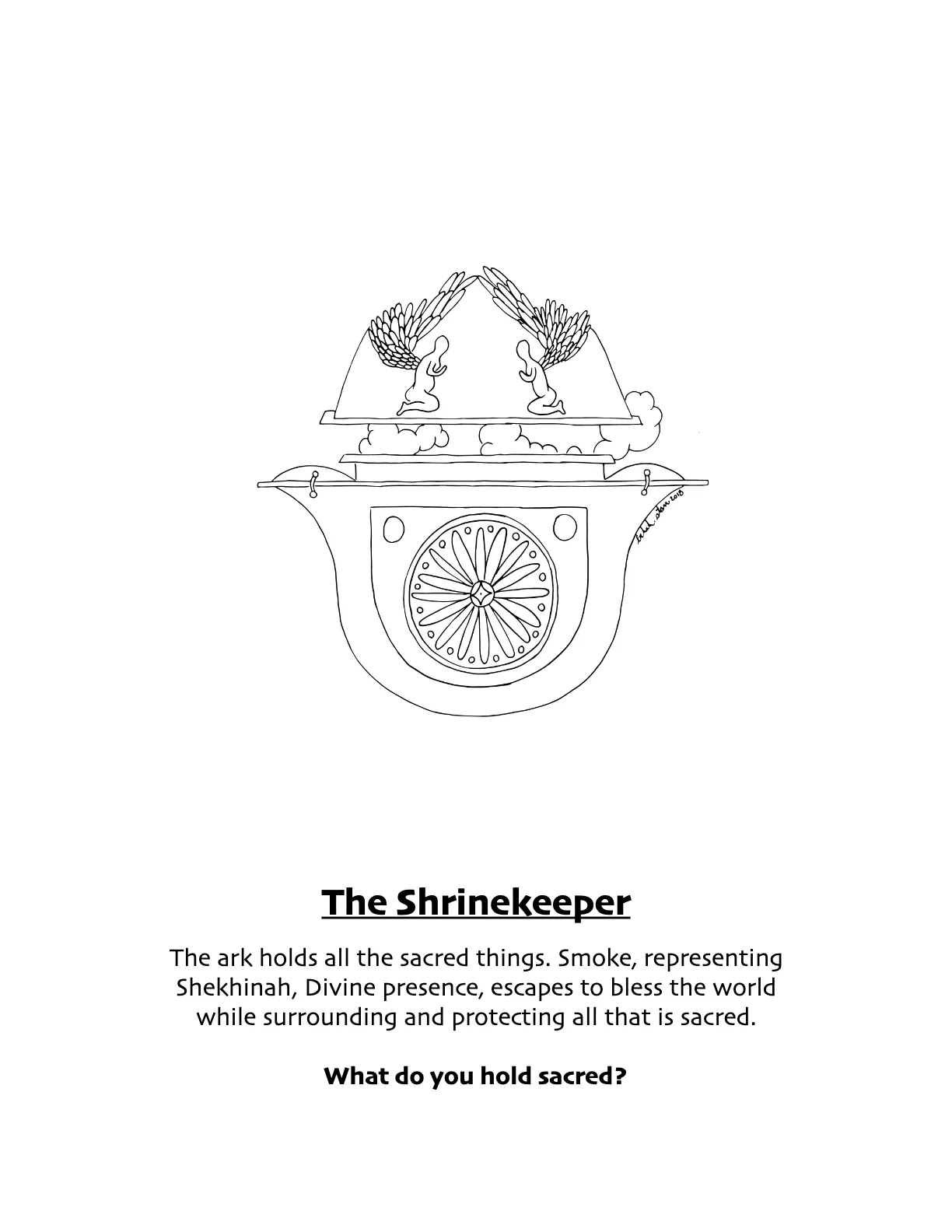
Hamsas of the Divine Feminine
Preview
Reimagined Rituals for Pregnancy, Birth and Postpartum
Preview
Supporting Someone Through a Fertility Journey
Preview
Navigating a Fertility Journey
Preview
showing
1-6
of
8
Page
1
of
2


