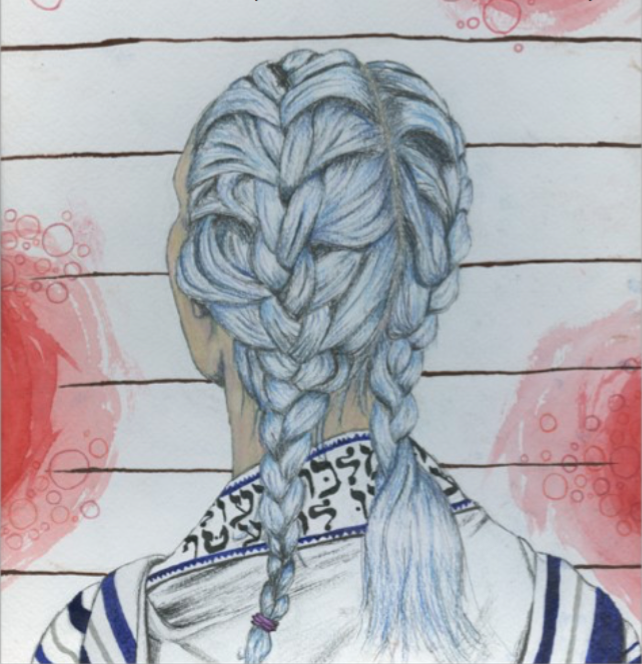
Revenge of Dinah: A Feminist Seder on Rape Culture in the Jewish Community
Preview
A simple piece of Matzah serves to remind us of the immense suffering of ancient slavery. Now we take into account a second item, bitter chocolate, to remind us of modern suffering. One might question how chocolate is representative of hardship, for its purpose is to satisfy one’s pleasures, to be eaten in times of love and craving. Simply put, it is expected to be sweet, but when it is not, the unwanted chocolate is automatically dismissed and rejected. The expectations of chocolate is to be sweet and readily available for one’s satisfaction. Victims/survivors of rape culture can be seen in a similar light. A prize to be won by the hands of a pursuer, it softens, melts, drip, drip, drip. Their dignity mutilated down the wrist, almost ink, slowly hardening to etch su ering like blood. No longer a clean-cut square, the chocolate is transformed into a desired shape, sugar stu ed in to make it what it is not. Today, we embrace chocolate in its plain form, celebrating not its bitterness, but its strength.
Everyone at the table should eat a piece of bitter chocolate and consider quietly the ways in which they feel pressured to take shapes that aren’t natural to them.
Acknowledgements & About Us
Preview
More
Shedding light on our culture of permissiveness toward sexual violence, illuminating the truth of its damaging consequences, and bringing it out of the shadows, we kindle the candles to create light where, for many survivors of rape and sexual violence, there is only darkness. We hope to light a path to healing with our candles. We also consider these candles as a yahrzeit (memorial) to remember those who have lost their lives to sexual violence and rape.
Every person sitting at the table may light one candle while reciting in either Hebrew or English the following:
Together, we say:
May these candles, lit on the Festival of Freedom, bring light into our hearts and minds. May they renew our courage to act for justice and freedom here and now. May they illuminate the path to truth, justice and peace. And so we repeat the ancient blessing:
בָּרוּךְ אַתָּה יי אֱלֹהֵינוּ מֶלֶךְ הָעוֹלָם, אֲשֶׁר קִדְּשָנוּ בְּמִצְוֹתָיו וְצִוָּנוּ לְהַדלִיק נֵר שֶׁל יוֹם טוֹב
Baruch atah Adonai, Eloheinu Melech ha-olam,
asher kiddishanu b’mitzvotav, v’tzivanu lehadlik neir shel Yom Tov.
We praise God, spirit of everything, who has made us distinct through
Your directives and has directed us to kindle the holiday lights.
Revenge of Dinah: Candle Lighting
Preview
More
when I am assaulted or harassed, I am asked what I am wearing or if I have been drinking.
when I am belittled to only be as important as the size of
my breasts.
when I am degraded for having multiple partners but a boy
is celebrated for “getting around.”
that I can’t wear form tting clothing without it becoming
indicative of my character.
teaching our daughters to avoid being raped, instead of
teaching our sons not to rape.
watching my boyfriend laugh at sexually violent jokes.
when survivors and victims are told not to report rape
because they shouldn't "ruin their man's life".
being expected to be the "perfect Jewish girl" and not speak
unless spoken to.
"locker room talk" that's permitted and perpetuated by
elected officials.
when I am attacked because I "asked for it" with the
clothes I was wearing.
when men assume if I won't hook up with them I'm a "bitch"
Rape is "the most underreported violent crime in America” (National Victim Center). Although many programs are created with the intent of educating students about rape and rape prevention, these programs are more heavily aimed at teaching people how to avoid rape, rather than teaching not to rape. Although the intent may be to prevent sexual assault by instituting programs that teach women avoidance, in reality these programs are simply reinforcing benevolent sexism and permitting a culture of victim-blaming, which only serves to increase sexual assaults and under-reporting. As all of us will be college-bound soon, we feel particularly concerned about rape culture because statistically speaking, 5 out of 10 of us will experience sexual harassment or violence on a college campus (National Institute of Alcohol Abuse and Alcoholism). Sadly, many campuses won’t o er much support, and the programs that do exist are uninformed and actually perpetuate permissiveness around sexual violence.
For example, The University of Illinois at Urbana-Champaign has implemented a sexual assault prevention program called ICARE, which, “helps people intervene in sexually disrespectful situations, and set a group norm in which sexually disrespectful behavior is recognized as a problem and active bystander behavior is promoted.” Indiana University mandates bystander training in their new student orientation, “During New Student Orientation, each new Hoosier is introduced to the importance of creating a culture of care on campus... [and offers] bystander intervention, campus resources, and how to get consent for sexual activity.” While both of these programs sound like they are on the right track, the common theme is teaching young adults to be able to recognize when violence is happening and nd ways to help intervene after it has already begun. The implied message is: You might get assaulted on campus, but we will help train your friends to help you afterward, assuming they are in the vicinity and also happen to give a shit about creating a culture of care at the moment. It’s not good enough, and we don’t believe any of this will actually prevent rape and assault from happening, never mind address the culture of permissiveness toward sexual violence it is caused by.
It is also important for us to acknowledge that our topic of “rape culture in the Jewish community” surfaced for us during the 2016 presidential election cycle. As a cohort, we spent signi cant time and energy processing the media storm that covered the overt, hostile sexism between candidates and pundits, the “locker room talk/pussy- grabbing” video recorded in 2005 and released during the campaign season, and the many allegations of sexual assault and violence surfaced before and after the election. This haggadah is not about electoral politics, but the topic was motivated by the news we read, watched, and processed together this year. Our research process, personal writing, and community-building helped us think through and make meaning of it all.
Another part of the reason that we are focusing on rape culture is because of the impact that is has on Jewish teen girls. Growing up in the Jewish community, many girls feel the need to be the “Perfect Jewish Girl” and to fit common beauty and gender roles set for them by societal pressures. Although the definition of the “Perfect Jewish Girl” may vary, there is a generalized, yet sometimes contradictory, commonality about what that girl looks like and does in regards to her Jewish identity. In a survey from RTI Cohort 1, many Jewish girls explained some stereotypes that they commonly experience in the Jewish community such as,
Women aren't as smart or as tough as men.
In men's eyes a woman is either a prude or a whore,
but can almost never be anything in between.
We're all expected to act in a feminine manner all the time.
All women who have children bear the responsibility of being their sole caretaker, and that none of that responsibility falls on the father.
Pressures to be the “Perfect Jewish Girl” are present in daily life and perpetuate a society of rape culture within our community. Some of our community members hear the message that women are “less than men” in Jewish religious and domestic spaces, and this allows for rape culture to ingrain itself in our community. Jewish teen girls are clearly aware of the sexist rhetoric that is present in our community, but they often do not have the language or resources to help prevent it. Without a way to solve the issue of rape culture in the Jewish community, pressures to be the “Perfect Jewish Girl” will continue to harm girls and continue the extent to which rape culture is present. Furthermore, there is a disconnect between Jewish teen girls and their parents regarding these societal pressures. RTI Cohort 2 collected data from 103 teenage girls and 62 parents. Their results suggested that almost all Jewish teens are aware of the idea of a “perfect Jewish girl”, but their parents were overwhelmingly oblivious to the idea, even though they were the ones largely perpetuating this paradigm.
As such, we want this haggadah to spread to our peers, who are also questioning their safety on college campuses and processing the world around them. We think that there is a large disparity between what people know about rape culture and how it is dealt with, in contrast with how serious it actually is. Many teenagers are a ected by rape culture, but do not understand to what extent they are being affected. We chose to focus our haggadah on rape culture because of how much it is integrated into our daily lives. Rape culture embodies many of the injustices that we have studied this year, and we feel that it is important to bring to light these societal injustices. The culture around unfair gender roles/expectations, sexual violence, and sexism in general is so integrated into our world, but our society, and our Jewish community institutions, are not doing enough to stop or address it. This haggadah is not just a feminist analysis of our community. It is an invitation to those with privilege, resources, and power to join us in changing the rape culture around us.
-
Download the full haggadah here: https://jufwebfiles.org/pdf/teens/RTI-Haggadah-Final.pdf
According to the National Institute of Alcohol Abuse and Alcoholism, at least 5% of American women have been sexually assaulted in adolescence or adulthood and that 18% have been raped. Furthermore, at least 20% of American men report having perpetrated sexual assault and 5% report having committed rape. The same studies report that approximately 50% of college women have been sexually assaulted, and 27% have experienced rape or attempted rape; in contrast, 25% of college men have committed sexual assault, and 8% have committed rape or attempted rape. At least one-half of all violent crimes involve alcohol consumption by the perpetrator, the victim, or both. Researchers consistently nd that approximately one-half of all sexual assaults are committed by men who have been drinking alcohol. Similarly, approximately one-half of all sexual assault victims report that they were drinking alcohol at the time of the assault, with estimates ranging from 30-79%
In recognition of the role alcohol plays in these devastating statistics, we encourage the guests of this Seder to replace wine with grape juice (even if you are 21 years of age or older) in a demonstration of solidarity with survivors and victims. We also want to emphasize that although one’s alcohol consumption may place them at increased risk of sexual assault, they are in no way responsible for the assault. The perpetrators are legally and morally responsible for their behavior.
Fill your first cup with grape juice.
The name Kiddush comes from the verb קדש (kiddush) to be consecrated, hallowed or sanctified. One of the traditional purposes of Kiddush is to drink wine to proclaim holiness. But the unavoidable truth is that we, as human beings, are not
inherently holy. At least, not in the way we’re used to thinking about holiness. We all have potential within us for committing acts of sexist oppression, victimization, degradation, and even sexual violence, whether benevolent or hostile. People who have done these things are not fundamentally di erent from everyone else, no matter how much we would like to believe otherwise. We are not holy, in the way that God is holy, or angels are holy. Instead, we have something that these ‘holy’ beings do not— free will, the power to choose between what’s right and what’s wrong. Or sometimes, what’s right, and what everyone else is doing, what an entire society is routinely condoning without a thought. However, the Torah does consistently refer to Jews as holy, separate, “chosen”. As a table, share some thoughts on what it means to be holy and exercise free choice while living in a culture that per- mits and even reinforces slut-shaming, victim-blaming, trivialization of violence, and “locker room talk”.
Lean to the left and recite the following. Then, drink your first cup of grape juice.
Brukah et Adonai Eloheynu Melech ha'olam boray p'ri hagafen.
You are blessed, Our God, Spirit of the World, who creates the fruit of the vine.
A simple piece of Matzah serves to remind us of the immense suffering of ancient slavery. Now we take into account a second item, bitter chocolate, to remind us of modern suffering. One might question how chocolate is representative of hardship, for its purpose is to satisfy one’s pleasures, to be eaten in times of love and craving. Simply put, it is expected to be sweet, but when it is not, the unwanted chocolate is automatically dismissed and rejected. The expectations of chocolate is to be sweet and readily available for one’s satisfaction. Victims/survivors of rape culture can be seen in a similar light. A prize to be won by the hands of a pursuer, it softens, melts, drip, drip, drip. Their dignity mutilated down the wrist, almost ink, slowly hardening to etch su ering like blood. No longer a clean-cut square, the chocolate is transformed into a desired shape, sugar stu ed in to make it what it is not. Today, we embrace chocolate in its plain form, celebrating not its bitterness, but its strength.
Everyone at the table should eat a piece of bitter chocolate and consider quietly the ways in which they feel pressured to take shapes that aren’t natural to them.

Acknowledgements & About Us
Preview
More
Shedding light on our culture of permissiveness toward sexual violence, illuminating the truth of its damaging consequences, and bringing it out of the shadows, we kindle the candles to create light where, for many survivors of rape and sexual violence, there is only darkness. We hope to light a path to healing with our candles. We also consider these candles as a yahrzeit (memorial) to remember those who have lost their lives to sexual violence and rape.
Every person sitting at the table may light one candle while reciting in either Hebrew or English the following:
Together, we say:
May these candles, lit on the Festival of Freedom, bring light into our hearts and minds. May they renew our courage to act for justice and freedom here and now. May they illuminate the path to truth, justice and peace. And so we repeat the ancient blessing:
בָּרוּךְ אַתָּה יי אֱלֹהֵינוּ מֶלֶךְ הָעוֹלָם, אֲשֶׁר קִדְּשָנוּ בְּמִצְוֹתָיו וְצִוָּנוּ לְהַדלִיק נֵר שֶׁל יוֹם טוֹב
Baruch atah Adonai, Eloheinu Melech ha-olam,
asher kiddishanu b’mitzvotav, v’tzivanu lehadlik neir shel Yom Tov.
We praise God, spirit of everything, who has made us distinct through
Your directives and has directed us to kindle the holiday lights.
Revenge of Dinah: Candle Lighting
Preview
More
when I am assaulted or harassed, I am asked what I am wearing or if I have been drinking.
when I am belittled to only be as important as the size of
my breasts.
when I am degraded for having multiple partners but a boy
is celebrated for “getting around.”
that I can’t wear form tting clothing without it becoming
indicative of my character.
teaching our daughters to avoid being raped, instead of
teaching our sons not to rape.
watching my boyfriend laugh at sexually violent jokes.
when survivors and victims are told not to report rape
because they shouldn't "ruin their man's life".
being expected to be the "perfect Jewish girl" and not speak
unless spoken to.
"locker room talk" that's permitted and perpetuated by
elected officials.
when I am attacked because I "asked for it" with the
clothes I was wearing.
when men assume if I won't hook up with them I'm a "bitch"
Rape is "the most underreported violent crime in America” (National Victim Center). Although many programs are created with the intent of educating students about rape and rape prevention, these programs are more heavily aimed at teaching people how to avoid rape, rather than teaching not to rape. Although the intent may be to prevent sexual assault by instituting programs that teach women avoidance, in reality these programs are simply reinforcing benevolent sexism and permitting a culture of victim-blaming, which only serves to increase sexual assaults and under-reporting. As all of us will be college-bound soon, we feel particularly concerned about rape culture because statistically speaking, 5 out of 10 of us will experience sexual harassment or violence on a college campus (National Institute of Alcohol Abuse and Alcoholism). Sadly, many campuses won’t o er much support, and the programs that do exist are uninformed and actually perpetuate permissiveness around sexual violence.
For example, The University of Illinois at Urbana-Champaign has implemented a sexual assault prevention program called ICARE, which, “helps people intervene in sexually disrespectful situations, and set a group norm in which sexually disrespectful behavior is recognized as a problem and active bystander behavior is promoted.” Indiana University mandates bystander training in their new student orientation, “During New Student Orientation, each new Hoosier is introduced to the importance of creating a culture of care on campus... [and offers] bystander intervention, campus resources, and how to get consent for sexual activity.” While both of these programs sound like they are on the right track, the common theme is teaching young adults to be able to recognize when violence is happening and nd ways to help intervene after it has already begun. The implied message is: You might get assaulted on campus, but we will help train your friends to help you afterward, assuming they are in the vicinity and also happen to give a shit about creating a culture of care at the moment. It’s not good enough, and we don’t believe any of this will actually prevent rape and assault from happening, never mind address the culture of permissiveness toward sexual violence it is caused by.
It is also important for us to acknowledge that our topic of “rape culture in the Jewish community” surfaced for us during the 2016 presidential election cycle. As a cohort, we spent signi cant time and energy processing the media storm that covered the overt, hostile sexism between candidates and pundits, the “locker room talk/pussy- grabbing” video recorded in 2005 and released during the campaign season, and the many allegations of sexual assault and violence surfaced before and after the election. This haggadah is not about electoral politics, but the topic was motivated by the news we read, watched, and processed together this year. Our research process, personal writing, and community-building helped us think through and make meaning of it all.
Another part of the reason that we are focusing on rape culture is because of the impact that is has on Jewish teen girls. Growing up in the Jewish community, many girls feel the need to be the “Perfect Jewish Girl” and to fit common beauty and gender roles set for them by societal pressures. Although the definition of the “Perfect Jewish Girl” may vary, there is a generalized, yet sometimes contradictory, commonality about what that girl looks like and does in regards to her Jewish identity. In a survey from RTI Cohort 1, many Jewish girls explained some stereotypes that they commonly experience in the Jewish community such as,
Women aren't as smart or as tough as men.
In men's eyes a woman is either a prude or a whore,
but can almost never be anything in between.
We're all expected to act in a feminine manner all the time.
All women who have children bear the responsibility of being their sole caretaker, and that none of that responsibility falls on the father.
Pressures to be the “Perfect Jewish Girl” are present in daily life and perpetuate a society of rape culture within our community. Some of our community members hear the message that women are “less than men” in Jewish religious and domestic spaces, and this allows for rape culture to ingrain itself in our community. Jewish teen girls are clearly aware of the sexist rhetoric that is present in our community, but they often do not have the language or resources to help prevent it. Without a way to solve the issue of rape culture in the Jewish community, pressures to be the “Perfect Jewish Girl” will continue to harm girls and continue the extent to which rape culture is present. Furthermore, there is a disconnect between Jewish teen girls and their parents regarding these societal pressures. RTI Cohort 2 collected data from 103 teenage girls and 62 parents. Their results suggested that almost all Jewish teens are aware of the idea of a “perfect Jewish girl”, but their parents were overwhelmingly oblivious to the idea, even though they were the ones largely perpetuating this paradigm.
As such, we want this haggadah to spread to our peers, who are also questioning their safety on college campuses and processing the world around them. We think that there is a large disparity between what people know about rape culture and how it is dealt with, in contrast with how serious it actually is. Many teenagers are a ected by rape culture, but do not understand to what extent they are being affected. We chose to focus our haggadah on rape culture because of how much it is integrated into our daily lives. Rape culture embodies many of the injustices that we have studied this year, and we feel that it is important to bring to light these societal injustices. The culture around unfair gender roles/expectations, sexual violence, and sexism in general is so integrated into our world, but our society, and our Jewish community institutions, are not doing enough to stop or address it. This haggadah is not just a feminist analysis of our community. It is an invitation to those with privilege, resources, and power to join us in changing the rape culture around us.
-
Download the full haggadah here: https://jufwebfiles.org/pdf/teens/RTI-Haggadah-Final.pdf
According to the National Institute of Alcohol Abuse and Alcoholism, at least 5% of American women have been sexually assaulted in adolescence or adulthood and that 18% have been raped. Furthermore, at least 20% of American men report having perpetrated sexual assault and 5% report having committed rape. The same studies report that approximately 50% of college women have been sexually assaulted, and 27% have experienced rape or attempted rape; in contrast, 25% of college men have committed sexual assault, and 8% have committed rape or attempted rape. At least one-half of all violent crimes involve alcohol consumption by the perpetrator, the victim, or both. Researchers consistently nd that approximately one-half of all sexual assaults are committed by men who have been drinking alcohol. Similarly, approximately one-half of all sexual assault victims report that they were drinking alcohol at the time of the assault, with estimates ranging from 30-79%
In recognition of the role alcohol plays in these devastating statistics, we encourage the guests of this Seder to replace wine with grape juice (even if you are 21 years of age or older) in a demonstration of solidarity with survivors and victims. We also want to emphasize that although one’s alcohol consumption may place them at increased risk of sexual assault, they are in no way responsible for the assault. The perpetrators are legally and morally responsible for their behavior.
Fill your first cup with grape juice.
The name Kiddush comes from the verb קדש (kiddush) to be consecrated, hallowed or sanctified. One of the traditional purposes of Kiddush is to drink wine to proclaim holiness. But the unavoidable truth is that we, as human beings, are not
inherently holy. At least, not in the way we’re used to thinking about holiness. We all have potential within us for committing acts of sexist oppression, victimization, degradation, and even sexual violence, whether benevolent or hostile. People who have done these things are not fundamentally di erent from everyone else, no matter how much we would like to believe otherwise. We are not holy, in the way that God is holy, or angels are holy. Instead, we have something that these ‘holy’ beings do not— free will, the power to choose between what’s right and what’s wrong. Or sometimes, what’s right, and what everyone else is doing, what an entire society is routinely condoning without a thought. However, the Torah does consistently refer to Jews as holy, separate, “chosen”. As a table, share some thoughts on what it means to be holy and exercise free choice while living in a culture that per- mits and even reinforces slut-shaming, victim-blaming, trivialization of violence, and “locker room talk”.
Lean to the left and recite the following. Then, drink your first cup of grape juice.
Brukah et Adonai Eloheynu Melech ha'olam boray p'ri hagafen.
You are blessed, Our God, Spirit of the World, who creates the fruit of the vine.
showing
1-6
of
41
Page
1
of
7